

THE FUTURE OF AI IN DIGITAL MARKETING
Imagine a consumer comparing options across multiple websites while researching a purchase influenced by online marketing. Within moments, AI-powered systems analyse patterns in their behaviour, recommend products, optimise messaging, and even determine the best timing to engage. The outcome is a seamless, personalised experience that feels intuitive and precise. This scenario demonstrates how AI is transforming marketing from reactive campaigns into proactive, strategy-driven engagement. To understand this transformation more clearly, let’s explore the core ways AI is driving change in digital marketing.
1. Hyper-Personalised Experiences
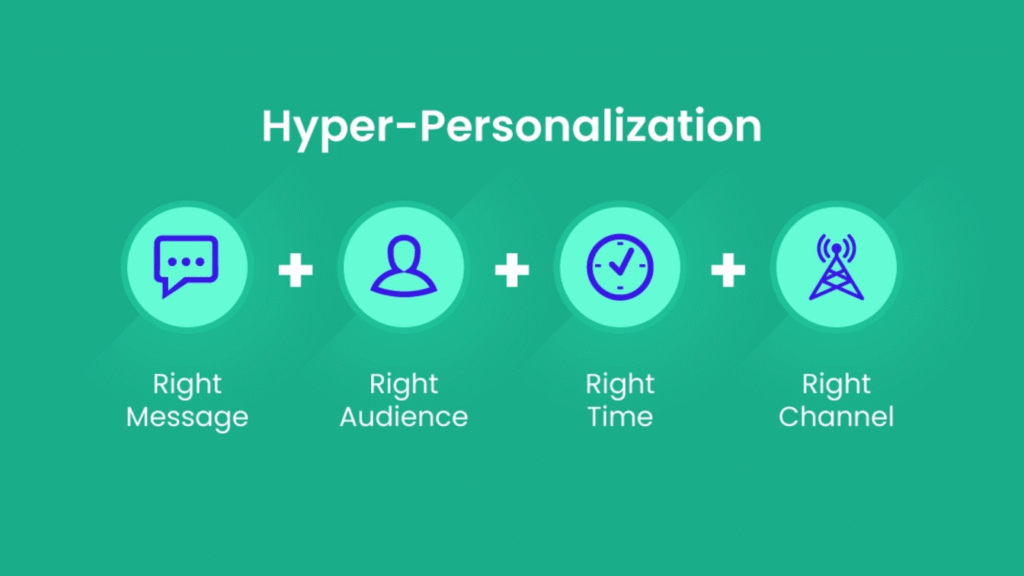
AI empowers businesses to deliver experiences and content finely tuned to individual preferences, behaviours, and engagement history. Firms like Amazon and Netflix are prime examples of how predictive personalisation can improve lifetime value, increase customer engagement, and foster loyalty. AI enables personal branding, social media marketing, and email marketing strategies to be tailored for each user.
2. Predictive Analytics for Strategic Insight
AI-driven analytics and chatbots provide relevant findings that enable brands to predict trends, pinpoint high-potential client segments, and effectively deploy resources. Companies can improve campaign efficacy and return on investment through the execution of proactive strategies by means of predictive intelligence. AI also facilitates digital marketing solutions for affiliate marketing, inbound marketing, and optimising SEO services.
3. AI-Supported Content Strategy
Tools like ChatGPT and Jasper assist in producing high-quality, contextually relevant content for blogs, social media, and email ads. In addition to generating content, people can concentrate on strategy, creativity, and audience engagement by using AI to suggest ideal pitches, subjects, and timing.
4. Customer service and AI for conversations
AI-powered chatbots and virtual assistants now handle complex customer interactions with contextual understanding and real-time responsiveness. These tools are used by brands like Sephora and H&M to expedite the customer experience, offer tailored advice, and foster conversions on a large scale.
5. Voice Search and Conversational Marketing

The proliferation of voice assistants like Siri, Alexa, and Google Assistant has created new avenues for engagement. By means of conversational campaigns and optimisation for natural language queries, AI helps brands engage with customers in a timely and contextually relevant way. This strategy improves online marketing, influencer marketing, and YouTube marketing initiatives.
6. Precise Advertising
AI algorithms synthesize behavioral, demographic, and social data to deliver specifically personalised advertising campaigns. Sites like Google Ads and Meta Ads use AI to cut down on inefficiencies and boost accuracy by optimising bidding, audience segmentation, and campaign performance.
7. Ethical AI and Consumer Trust
Using AI responsibly is critical for sustaining consumer trust. Transparent data practices, privacy safeguards, and algorithmic fairness are essential. Firms that put an emphasis on ethical AI build long-term loyalty, legitimacy, and reputation.
Conclusion
AI is not just influencing digital marketing; it is transforming it at every level. Organisations that embrace AI strategically can streamline operations, deliver hyper-personalised engagement, and achieve once-unimaginable results. In the future, every interaction will have meaning, every tactic will be more incisive, and every result will be magnified with search intent for those who successfully blend technological intelligence with human creativity. With AI at its core, marketing is about building enduring relationships, propelling expansion, and influencing the future of the customer experience rather than just running ads.