
Basics of Google Ads
One night, a homeowner discovers a leaky tap that won’t stop. Rather than waiting until morning, he grabs the phone and looks up “emergency plumber near me.” Google displays a few results in a second, where an advertisement appears at the top. He clicks the ads and quickly calls to schedule a service. Here, the plumber didn’t knock on doors or run newspaper ads; they simply placed a digital ad on Google and ranked at the top, where the client can find it immediately. This demonstrates how crucial Google Ads has become in the modern world.
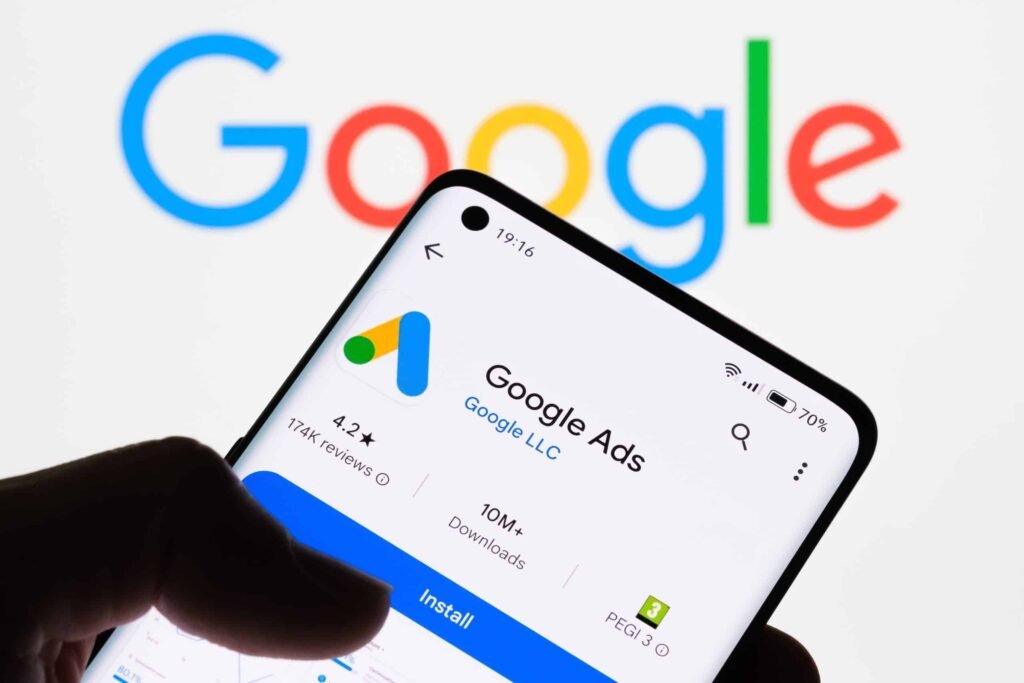
Google Ads is one of the quickest and most efficient ways to achieve targets like boosting sales and building brand reputation. You can use Google Ads to post advertisements on a wide variety of websites. It can display your advertisements as promotional banners on more than 2 million applications, sites, and media that make up the Google Display Network.
Formerly known as Google AdWords, Google Ads was introduced in October 2000. It provides pay-per-click (PPC) advertising, where businesses publish their advertisements on websites and pay when people click on them. These sponsored search outcomes will show up above those that are organic on any particular Google search engine results page (SERP).
What is Google Ads?
Imagine Google as a packed highway, and your clients as drivers looking for their destination. Google Ads is your signboard guiding customers, but smarter. It puts your website at the top only when people are actively looking for goods or services similar to yours. In addition to this, Google Ads provides instant exposure, genuine intent, and quantifiable outcomes with no guesswork or waiting. With Google Ads, you can promote your services on Google’s web domains. These consist of YouTube, partner websites, and the search engine(Source: SEMrush).
Today, more than 60% of startups and mid-sized businesses depend on Google Ads for their digital marketing, and over 7 million companies and marketing firms use it as their main means of digital advertisements (Source: Demandsage). For your advertisements to show up on Google, you must pay a fee. That cost is determined through a procedure known as “bidding.” Similar to an auction, bidding allows a company to determine the highest price it will pay when an advertisement is clicked.
How Google Ads Works:
If you are wondering about how Google Ads works, it simply works by displaying your advertisements to users who search for particular keywords, and you are only charged when your ad is clicked. But how does Google show your Ads? The answer is still simple: Google Ads displays ads according to your bid, the quality of the ad, and how relevant it is. Users see ads that align with their interests, and businesses reach viewers who are likely to respond to them. An auction takes place silently in the background when a user visits a site in the GDN or conducts a Google search. There, you and other businesses place bids to have your ads displayed. Then, your Google Ads account sets the highest price that you are ready to pay per click or impression(Source: Google).
Additionally, businesses can target audiences according to their location, device, background, hobbies, and even past visits to the website. This accuracy increases the chance of engagement by ensuring that advertisements reach the right people at the right time. Google Ads offers comprehensive analytics and reporting tools that let advertisers monitor ROI, visits, impressions, and outcomes.
Step-by-Step Guide to Google Ads
Have you ever wondered how some brands dominate Google search and get the top ranking instantly? This comprehensive guide to Google Ads will walk you through every step of the process on how it’s done.
Set Up a Google Ads Account: It’s simple to set up a Google Ads account; simply go to ads.google.com and enter your business information, log in with your Google account, and start developing your first campaign.
Choose your campaign type: The Google Ads campaign you choose entirely depends on your strategy and marketing goals (sales, enquiries, traffic, and publicity). Some common campaign types are Search network (used for text ads on Google), Display network (used for visuals across the web), Shopping (product listings for online retail), Video (YouTube), Mobile App, and Performance Max (all channels automated). Firstly, define your goals and choose the campaign type that best reaches clients, striking a balance between control and automation.
Define Your Target Audience: You can define your target audience in Google Ads by using Google’s tools (like In-Market, Custom Segments, and Remarketing) to reach ideal customers based on their background, interests, behaviours, and life events.
Pick Your Keywords: To generate keywords for Google Ads, you can use Keyword Planner or other tools for your product or website to generate ideas for Google Ads keywords; prioritise particular, relevant, multi-word phrases over single, general terms. To attract high-intent customers and maximise budget, use Google’s AI with broad match for effectiveness while making sure keywords aren’t too general or non-compliant (like single words/unknown brands).
Set Your Budget And Bidding Strategy: This involves determining your monthly spend, selecting a smart bidding type (such as Max Conversions) according to your objectives (sales, enquiries), and then putting these into your advertisement settings. You can use portfolio Bid Techniques to allow Google’s AI to optimise for value or revenues while giving you more control over several campaigns and making sure your budget aligns with your objectives.
Create Compelling Ads: Apply solid call-to-actions (CTAs), include ad assets (images, logos, extensions) for increased visibility, emphasise your Unique Selling Proposition (USP) with obvious benefits and demand (like deals), and integrate keywords with advertisement copy and landing pages to create appealing Google Ads.
Monitor & Optimize: Monitoring and optimizing Google Ads requires employing tools like Keyword Planner to constantly track important metrics (CTR, Conv. Rate, ROAS), refining keywords (adding negatives, identifying long-tails), enhancing ads and landing pages, and making use of ad extensions
This step-by-step guide to Google Ads provides a simple, structured roadmap to help you set up your first campaign with confidence.
Google Ads for Small Business
Startups cannot afford to be invisible in this extremely competitive world of digital marketing. Google Ads is like a spotlight on an overcrowded stage for a small company, as it shines directly on the clients who are already looking for what you have to offer, making every advertising dollar count.
As a startup, it might not always be easy for small business owners to navigate the world of marketing and publicity. However, given the current competitive environment, successful marketing for small enterprises is more crucial than ever. Start by thinking about the goals you have for your campaign. When you build up your advertising campaign, this will help you align with planning, creative writing, bidding, and more. Flexibility is one of the main benefits for small enterprises. You can begin with a small budget, monitor results in real time, and modify campaigns according to what is successful. Additionally, Google advertisements offer quantifiable outcomes that let you know which advertisements yield the best return on investment and where to concentrate your marketing efforts.
Effectiveness of google ads
Did you know that for every $1 invested in Google Ads, businesses typically earn $2? Imagine that you double your investment by simply displaying your content in Google to the correct people at the right moment. This is the effectiveness of Google Ads for small businesses.
Although success is largely dependent on correct setup, pertinent keywords, robust landing pages, and ongoing optimisation, Google Ads are incredibly effective for producing instant, desired outcomes like leads, sales, and recognition for a brand. They also offer quick ROI by detailed targeting (keywords, demographics, location) and quantifiable results. Google Ads enable companies to instantaneously show up at the top of search results for high-intent enquiries, connecting with clients at the same moment they are searching for products or services.
Final Thoughts
If you’re new to Google advertisements, learning the fundamentals of Google Ads may be both thrilling and overwhelming. With this beginner’s guide, you now have a better grasp of how Google Ads operate and why it’s a wise investment for your company.
In the modern digital age, visibility is crucial. In addition to helping businesses survive online, effective SEO and digital marketing help them shine. Every tactic, from improving search visibility to producing engaging content and focused advertising, is intended to engage the appropriate audience at the appropriate moment. Online success is measurable and deliberate rather than coincidental. Businesses may increase engagement, convert clicks into clients, and achieve long-term success by concentrating on results-driven methods. Ultimately, having a great online presence guarantees that people will notice your business.
FAQs
What are the basics of Google Ads?
You can easily set up your advertising and track your results using Google Ads. Create your ad, choose the keyword you want to target, fix your daily advertising budget, and establish an account to get started and You’re done! Google Ads are entirely worth it for all scales of businesses.
What is Google Ads’ primary objective?
Google Ads’ primary objective is to increase sales, leads, or website traffic by displaying your business to individuals who frequently use Google to search for the products or services that you provide.
How much do Google Ads pay for 1000 views?
Google pays $0.2 to $2.5 for every 1,000 views. However, it depends on a variety of criteria, such as the information on your website, user location, duration spent on the web page, and device breakdown.
Does Google Ads charge every month?
Usually, charges don’t occur every month or at the end of the month. They are mostly dependent on payment limits, or the predetermined amount of expenses that your account hits, and the charges may occur more than once a month.
How soon can I see the results from Google Ads?
Results from Google Ads can be very instant. Ads can be displayed within hours of a campaign becoming live, which makes it perfect for immediate exposure and generating leads.
Does running Google Ads require a website?
It is strongly advised to have a website since it facilitates the conversion of visitors into leads or sales. Nonetheless, some ad formats, such as local or call-only ads, can function with very few web pages.