Imagine craving a fresh cup of coffee. You open your phone, search for “coffee near me,” and within a fraction of a second, a local Starbucks appears at the top of your map results.
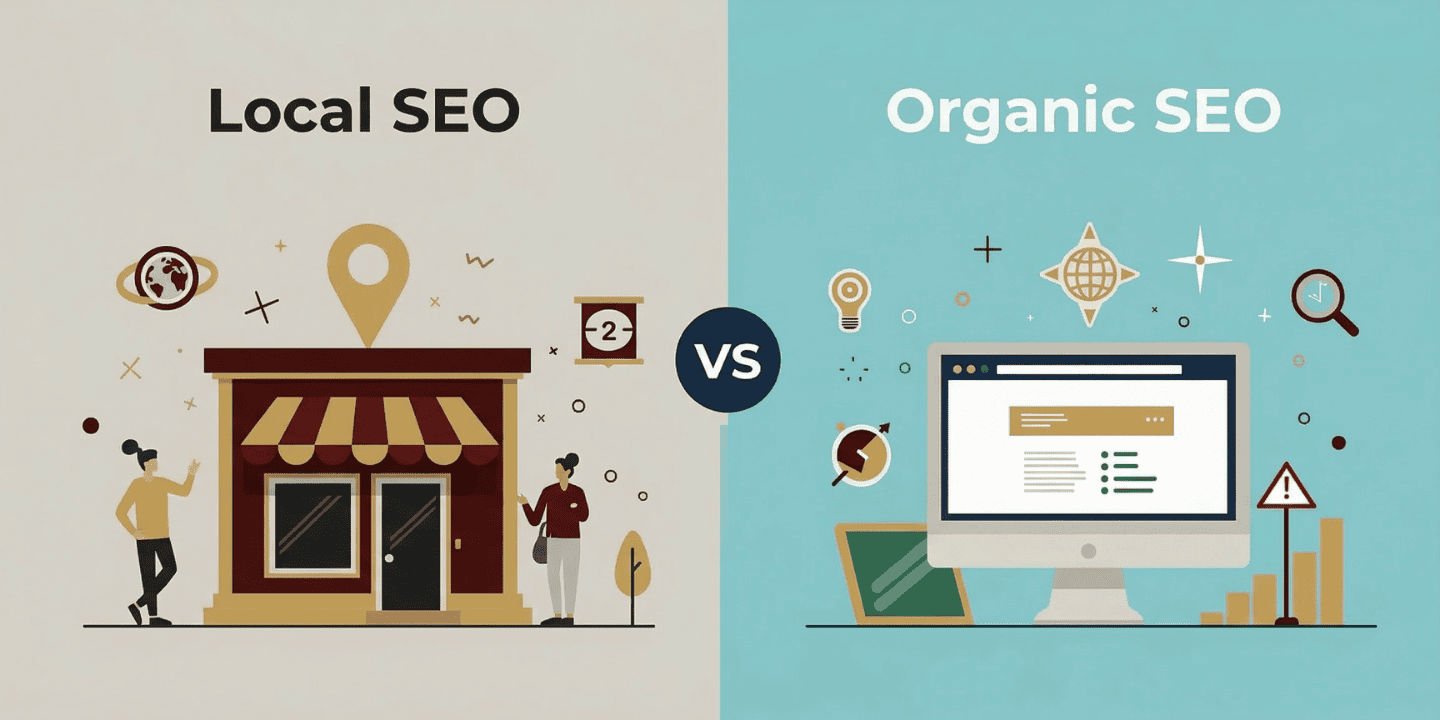
That instant result isn’t random; it is the direct output of combining Organic SEO and Local SEO.
Starbucks generates over 6 million monthly visits from organic search alone without relying strictly on paid advertising. By optimizing for high-volume informational terms alongside precise geographical queries, they control digital authority while driving foot traffic straight to their store registers.
Whether you run an e-commerce brand or a physical storefront, understanding how to leverage organic and local search strategies is essential for sustainable business growth.
What is Organic SEO?
Organic SEO is the practice of optimizing your website to rank naturally on search engine results pages (SERPs) without paying for ad placements. It acts as an automated, non-stop discovery channel for your brand.
Unlike paid ads that stop generating traffic the moment your budget runs out, organic search optimization builds long-term authority. Higher organic rankings foster consumer trust, lower client acquisition costs, and attract visitors actively seeking solutions.
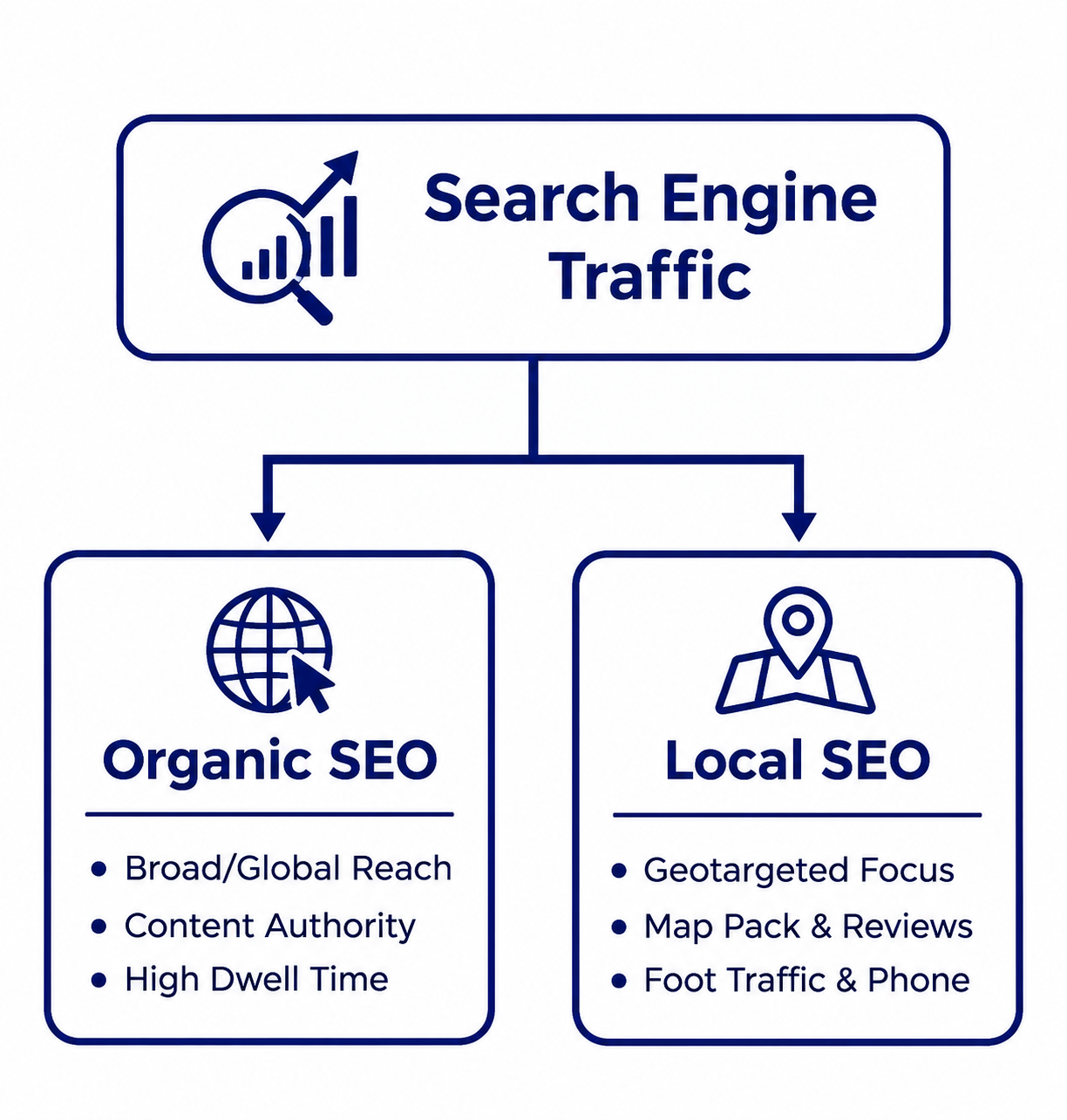
Key Takeaway: Organic SEO focuses on broad relevance, user intent, content quality, and site authority across regional or global audiences.
The Step-by-Step Guide to Mastering Organic SEO
To build domain authority and rank higher for competitive search terms, follow these five foundational steps:
1. Conduct Intent-Driven Keyword Research
Uncover exact phrases your prospective clients use. Target long-tail keywords (phrases containing three or more words) because they carry higher search intent and face less competition.
- Recommended Tools: Ahrefs, SEMrush, Google Keyword Planner, Google Trends.
2. Craft Comprehensive, Problem-Solving Content
Address your audience’s questions thoroughly. Build guides, articles, and resource hubs that solve problems better than any competing page on the first page of Google.
- Discovery Tools: Google’s People Also Ask feature, AnswerThePublic.
3. Implement On-Page SEO Best Practices
Structure content clearly so search crawlers can index your topics smoothly:
- Include primary keywords in your
H1,H2, andH3headers naturally. - Write concise URLs and optimized meta descriptions.
- Add descriptive alt text to every image.
- Utilize plugin tools like Rank Math or Yoast SEO for real-time content checks.
4. Optimize Technical SEO and Site Speed
Search engines prioritize sites that deliver frictionless user experiences (UX):
- Ensure full mobile responsiveness across all device sizes.
- Maintain page load times under two seconds.
- Audit indexing and broken links using Google Search Console, PageSpeed Insights, and Screaming Frog.
5. Build High-Authority Backlinks
Backlinks serve as digital votes of confidence. Earn links from reputable industry websites through original research, guest publications, and valuable resource link-building.
What is Local SEO?
Local SEO optimizes your digital presence to attract customers from specific geographic areas. When users search for queries with local intent, such as “plumber near me” or “best garage in Coventry,” local search algorithms prioritize businesses nearby.
Local SEO centers heavily on the Google Map Pack, local directory listings, customer reviews, and geographic consistency across the web.
The Step-by-Step Guide to Dominating Local SEO
If your business relies on local foot traffic, phone calls, or service-area visits, execute these localized strategies:
1. Claim and Optimize Your Google Business Profile (GBP)
Your Google Business Profile is the cornerstone of local search visibility.
- Fill out your complete profile: legal business name, address, phone number, and operating hours.
- Add high-resolution images of your storefront, team, and services.
- Post regular updates, special offers, and holiday hour adjustments.
2. Target Local Keywords
Incorporate city-specific identifiers into your site content and metadata (e.g., “Car Repair in Coventry” rather than just “Car Repair”).
3. Build NAP Consistency Across Directories
Ensure your Name, Address, and Phone number (NAP) are identical across every online citation (Yelp, YellowPages, local chambers of commerce). Discrepancies confuse search engines and drop your local ranking.
- Management Tools: Moz Local, BrightLocal.
4. Systematize Customer Reviews
Encourage satisfied clients to leave reviews on your Google Business Profile. Respond promptly to all feedback, both positive and negative, to signal active management to search algorithms.
- Automation Tools: Podium, Grade.us.
5. Monitor Local Performance Metrics
Track localized rankings, direct calls, and direction requests using Google Business Profile Insights, Google Analytics, and Local Falcon.
Organic SEO vs. Local SEO: Key Differences
| Feature | Organic SEO | Local SEO |
| Primary Goal | Rank content globally or nationally for general terms | Rank locally for physical visits, calls, and service leads |
| Main Ranking Factors | Content depth, backlinks, technical health, UX | Google Business Profile, local proximity, reviews, NAP |
| Search Intent Example | “How to fix a car engine leak” | “Emergency car repair near me” |
| Primary Beneficiaries | E-commerce sites, blogs, SaaS brands, media publications | Physical shops, restaurants, local service providers |
Final Thoughts
Mastering both organic and local SEO isn’t about choosing one strategy over the other; it’s about aligning your search presence with how your customers actually look for you. While local SEO captures high-intent customers right down the street who are ready to make a purchase, organic SEO builds the long-term authority and credibility needed to dominate search rankings for years to come.
By structuring your content around clear user intent, maintaining your local listings, and consistently delivering genuine value, you build a resilient digital marketing engine that turns search traffic into reliable, long-term business growth.