
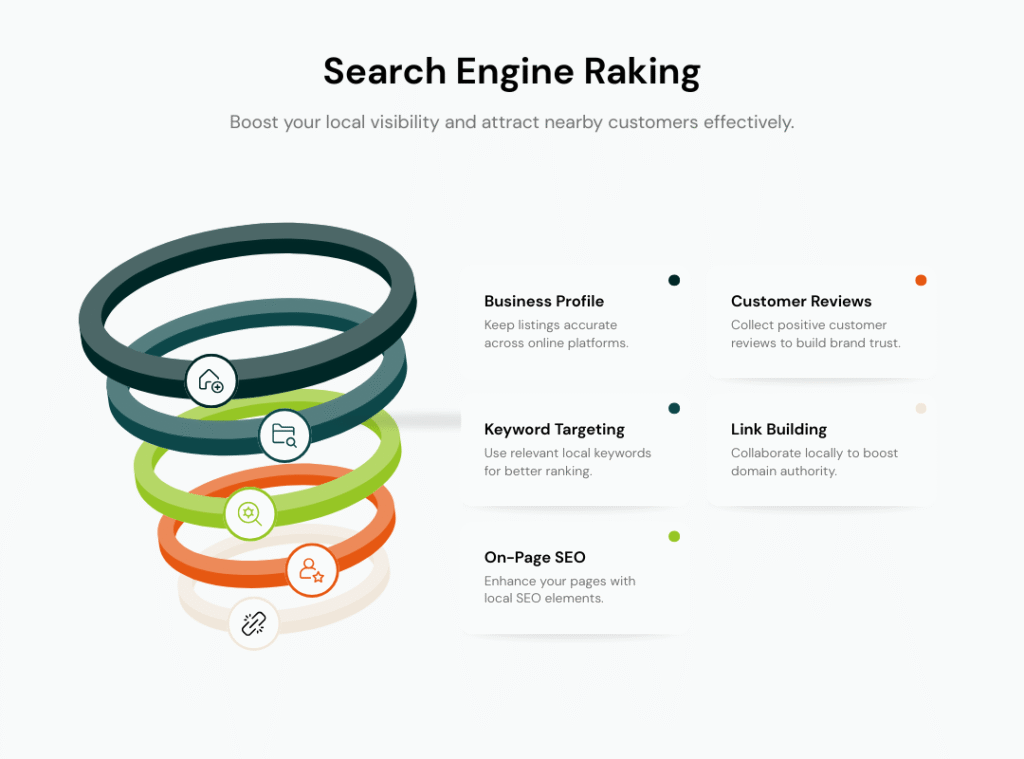
How Does the Search Engine Rank Content?
You enter a question in Google, and in the blink of an eye, you see tons of answers appearing in front of you. However, what you don’t see is the behind-the-scenes complexities where search engines are running a sophisticated race, deciding which content goes to the top. But how exactly do Search engines determine which page should rank higher? The search engine doesn’t just assume; it considers a complex set of parameters that determine the ranking of the sites. Search engine ranking is similar to a real-time election, with millions of searches every day acting as votes, and only the most relevant, trustworthy material tops the chart.
Search engines employ a complex algorithm to rank websites based on factors such as relevance, quality, backlinks, and user experience, delivering the most useful results for a user’s query. These algorithms prioritise content that best satisfies user needs and offers a positive experience by balancing hundreds of signals
The Role of Google’s Algorithm
Google handles more than 8.5 billion searches globally each day. The algorithm that powers each of these searches evaluates countless signals, including user experience, backlinks, website quality, and content value, to determine which results show up first. Research demonstrates how important the algorithm is in determining what information users actually see, as the top 3 search results account for more than 75% of all clicks(Source: SQ Magazine).
Google algorithms’ main role is to deliver the most relevant, excellent, and practical search outcomes to users in a split second. It is a sophisticated system of continuously changing algorithms and machine learning techniques created to efficiently arrange and display the enormous volume of data on the internet. It uses AI systems like BERT and MUM to decode the intent behind searches, assesses content for E-E-A-T (expertise, experience, authority, trust), and takes user experience elements like speed, mobile friendliness, and secure browsing into account. The algorithm serves as the unseen guide that determines which pages should be at the top of search results by tailoring results based on context and continuously removing spam or poor-quality content.
Key Factors Affecting Content Ranking
Why didn’t Google display my article? Emma mumbled in frustration as she browsed through the list of search results. Meanwhile, Alex typed the same query across the town and saw his website that had strong backlinks, quick-loading images, and lucid, authoritative content, ranked at the top instantly. Why are the cases so different? The main factors that determined the differences in this scenario are the relevance, quality, backlinks, user experience, and context of the content. Understanding how these components function can be the difference between ending up on page one of search results or getting lost.
Google uses five major signals to rank content. It analyses the intent of your query, determines the content’s relevance, gives priority to reliable, high-quality content, ensures device-friendliness as a seamless experience, and customises results based on user settings and its context.
Quality Content
A key component of SEO success is producing high-quality content, which will improve your website’s rankings, exposure, and organic traffic. Researched, unique, and interesting content encourages sharing, lowers bounce rates, and keeps users on your website longer, all of which are favourable signals for Google.
Quality content should always fulfil user intent by providing readers with the details or answers they are looking for. It should provide unique perspectives, analysis, or research that highlight the author’s knowledge and personal experience with the subject. In addition to providing more value than rival pages, effective content is detailed and relevant, fully addressing users’ enquiries.
Keyword Optimization
It is basically enhancing your page to better utilise your target keywords in order to increase the number of people who find your website through search engines. It is not about locating, evaluating, and selecting keywords. That’s researching keywords. Keyword optimization is using the right keywords in the right contexts and methods, and this is more likely to assist you in achieving your SEO objectives.
Backlinks
Backlinks are links to your web page from other web pages, and they are crucial because they can drive traffic to your web page and affect its natural (unpaid) rankings in search engines. It acts as an endorsement from other websites, telling Google that your information is reliable and worthwhile. Backlinks can be obtained organically(unpaid) or by creating them.
Inbound and incoming links are other names for backlinks. However, these are external/outbound/outgoing links from the viewpoint of the websites that link to other websites.
User Experience (UX)
A pleasant user experience (UX) is when visitors positively interact with your website. Furthermore, having a high Google ranking depends on having a good user experience. This is due to the fact that many of the steps you take to enhance user experience (UX) also contribute to search engine optimisation (SEO), a collection of strategies that help increase your online presence. A swift, user-friendly website increases your SEO, signals reliability, and keeps visitors interested. To put it briefly, excellent user experience (UX) is a ranking factor that informs Google that your material actually adds value, and is great for viewers as well.
Improving Content Marketing on Google
Improving content marketing on Google is like being the most helpful guy in a crowded room; people notice you, pay attention, and remember your brand. Google detects when your material is relevant to what people are looking for, loads quickly, and offers genuine value. As a result? Higher rankings, greater involvement, and material that’s effective even when you’re not pushing it.
Google content marketing can be boosted by creating useful content that reflects relevant information and offers an excellent user experience. Begin by doing in-depth research using tools like Google Trends to find popular themes and recognise content gaps where user concerns are unanswered. Then, to more effectively reach your audience across various channels, vary the formats of your content by combining blog articles, videos, infographics, social media updates, and guidelines. Make your text easier to read by using bullet points, informative headings, subheadings, and appropriate images. Lastly, content should be in a way that is both informative and user-friendly, and which organically integrates SEO best practices by incorporating relevant keywords into your headings, meta descriptions, and page titles.
Final Thoughts
Search engines use a precisely calculated process for evaluating content, rewarding websites that offer users real value. Even though Google’s algorithm might appear complicated, success mostly relies on grasping the fundamentals: producing excellent content, optimizing for the appropriate keywords, obtaining reputable backlinks, and providing a flawless user experience.
Improving content marketing solely focuses on creating content that genuinely benefits people, rather than merely checking SEO boxes. Effective research, a variety of formats, and easily readable content, combined with organic SEO techniques, not only make your brand visible in search results, but they also make it desirable to find. Quality, relevance, and user-focused content ensure casual visits are transformed into genuine engagement and long-term visibility.
FAQs
How does content rank in search engines?
Our algorithms seek to rank the content that appears to be most beneficial after recognising relevant content. They approach this by identifying signals that can be used to identify content that exhibits authority, competence, and reliability.
How do search engines rank?
Search engines consider a variety of signals and parameters, such as the keywords in the query, the relevancy and accessibility of the pages, the domain knowledge of the sources, and your location, to provide readers with the most helpful information.
Can I see if someone has Googled me?
No, you can’t see if anybody searches for you on Google. The Google Search corporation has no motive in alerting users when anyone has been researched. It doesn’t disclose this information to anybody, even though it might maintain such records for its own purposes.
How do search engines find your content?
Search engine discovers your content through a crawling, indexing, and ranking process. First, Google uses web crawlers to find data on the internet. The content is then examined and stored in the search engine’s index. Lastly, the ranking is provided to the most appropriate contents of the index according to a user’s search.
How pivotal are keywords in content ranking?
Keywords support search engines in analysing the subject matter of your material. Although overstuffing keywords might lower ranks, using suitable phrases organically in titles, headers, meta descriptions, and throughout the text increases visibility.
Does the length of the content affect search engine ranking?
Although there is no fixed length parameter, more lengthy, well-structured content often does better since it might address a topic in greater detail. But quality is always more important than quantity.
rabin Reply
good blogs.Really helpful. thanks for sharing