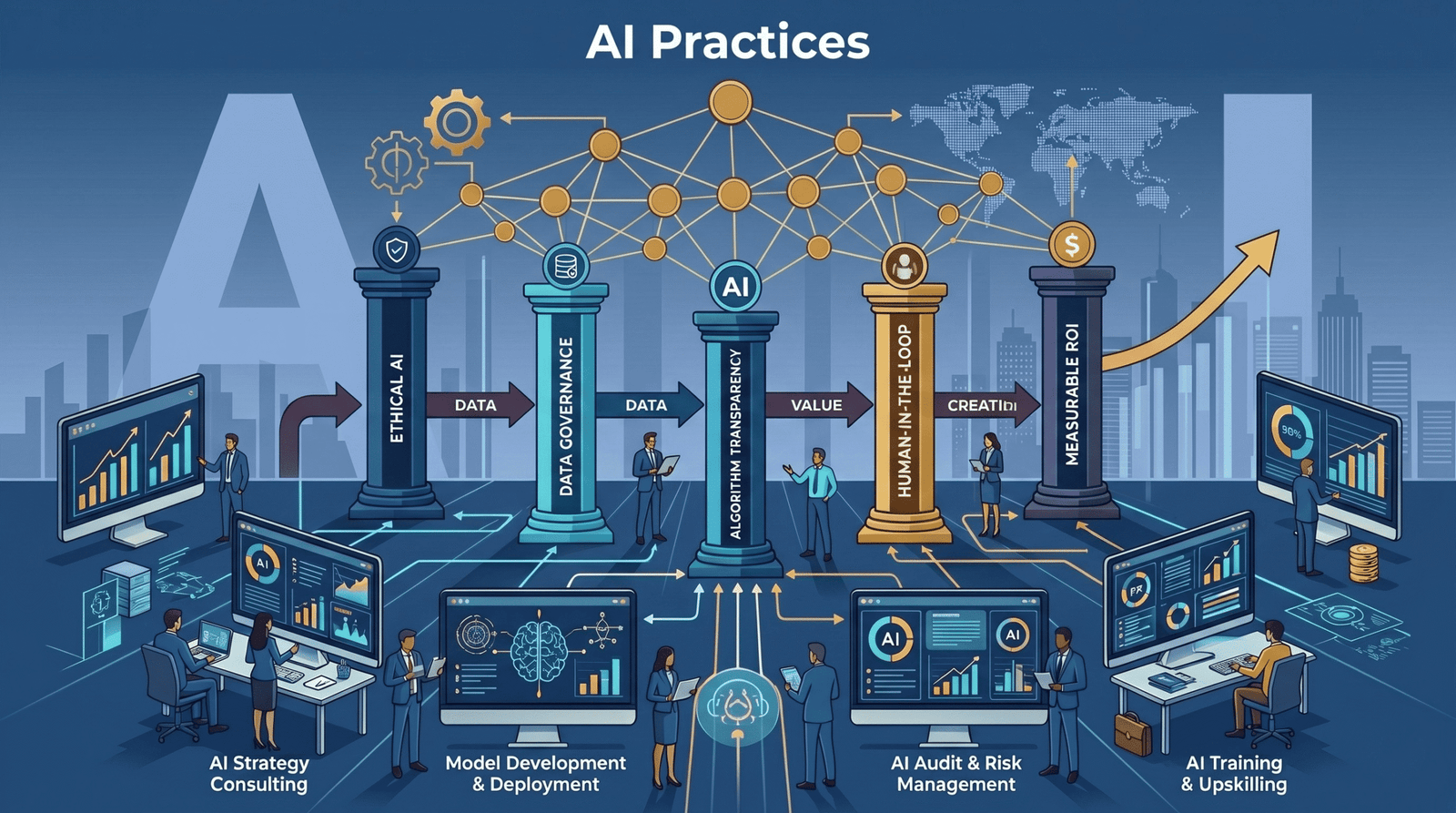
Artificial Intelligence is transforming the way businesses operate. From automating customer service and improving marketing campaigns to streamlining operations and analyzing large volumes of data, AI is helping organizations become faster, smarter, and more efficient.
However, with great power comes great responsibility.
As AI becomes part of everyday business operations, organizations must ensure that these systems are fair, transparent, secure, and aligned with ethical standards. A poorly designed AI system can introduce bias, expose sensitive data, damage customer trust, and even lead to legal or regulatory issues.
That’s why Responsible AI has become more than just a technology trend; it’s now a business necessity.
In this guide, we’ll explore what Responsible AI means, why it matters, and the practical steps every organization can take to build trustworthy AI systems.
What Is Responsible AI?
Responsible AI refers to the practice of designing, developing, deploying, and managing artificial intelligence in a way that is ethical, transparent, secure, and accountable.
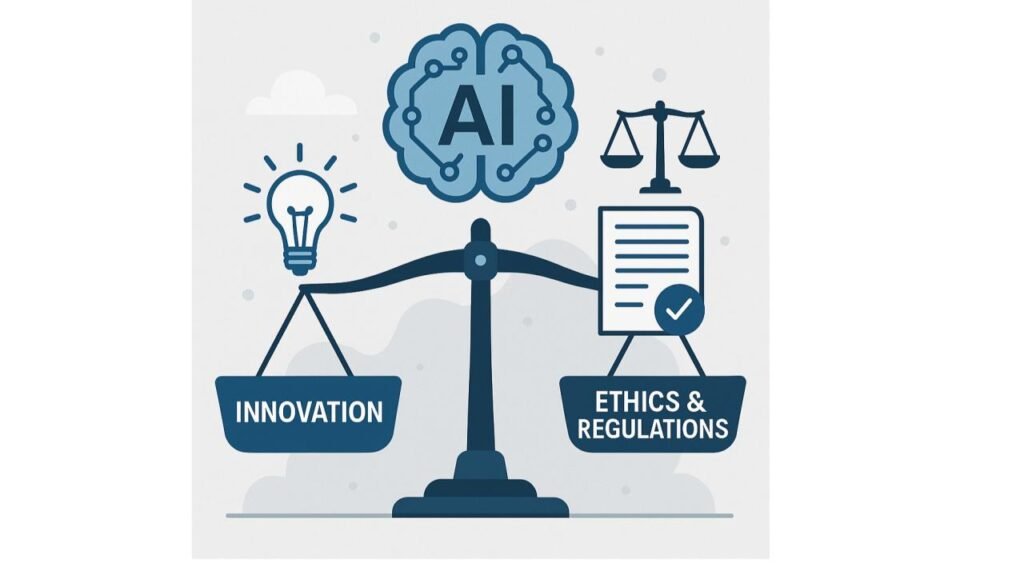
Rather than focusing only on what AI can do, Responsible AI asks an equally important question:
“Should AI make this decision, and if so, how can we ensure it does so fairly and responsibly?”
Organizations that adopt Responsible AI don’t simply build smarter systems; they build systems that people can trust.
Why Responsible AI Matters
Businesses that ignore responsible AI practices risk more than technical problems.
Poorly governed AI can lead to:
- Biased or discriminatory decisions
- Loss of customer trust
- Data privacy breaches
- Regulatory penalties
- Reputational damage
- Inaccurate business decisions
On the other hand, organizations that prioritize responsible AI often experience stronger customer confidence, better regulatory compliance, improved decision-making, and greater long-term innovation.
Responsible AI isn’t about slowing innovation; it’s about making innovation sustainable.
1. Establish Clear AI Principles
Every successful Responsible AI strategy begins with a clear set of guiding principles.
These principles should reflect your company’s values while addressing industry regulations and customer expectations.
Common principles include:
- Fairness
- Transparency
- Accountability
- Privacy
- Security
- Reliability
- Human oversight
For example, your organization might establish policies such as:
- AI should never make high-risk decisions without human review.
- Customer data should only be used with proper consent.
- Every AI model should be documented and regularly audited.
Clear principles provide consistency as AI projects grow across different teams.
2. Create Strong AI Governance
Responsible AI isn’t solely the responsibility of your IT department.
Successful organizations create cross-functional governance teams that include representatives from:
- Leadership
- Engineering
- Product Management
- Legal
- Compliance
- Data Science
- Customer Support
These teams oversee AI initiatives, approve high-risk projects, define acceptable risk levels, and ensure compliance with changing regulations.

Good governance transforms Responsible AI from a policy document into a practical business process.
3. Build Ethics Into Every Stage of AI Development
Responsible AI should be integrated throughout the entire AI lifecycle, not added at the end.
During Planning
Ask questions such as:
- Who benefits from this AI?
- Who could be negatively affected?
- Could bias influence decisions?
During Development
Implement:
- Bias testing
- Explainable AI methods
- High-quality training data
- Documentation of data sources
After Deployment
Continue monitoring:
- Model accuracy
- Performance drift
- User complaints
- Unexpected behavior
Responsible AI is an ongoing process, not a one-time project.
4. Prioritize Transparency
People are far more likely to trust AI when they understand how it works.
Businesses should clearly communicate:
- What AI is doing
- What data it uses
- How decisions are made
- When humans remain involved
Technical documentation such as model cards, audit reports, and version histories also improves accountability for developers and regulators.
Transparency builds trust with customers, employees, and stakeholders alike.
5. Protect Customer Data and Privacy
AI systems are only as trustworthy as the data they rely on.
Organizations should:
- Collect only the data they truly need.
- Encrypt sensitive information.
- Implement strong access controls.
- Remove personally identifiable information whenever possible.
- Obtain clear customer consent.
Strong privacy practices not only reduce security risks but also strengthen customer confidence.
6. Reduce Bias and Improve Fairness
Bias remains one of the biggest challenges in artificial intelligence.
If AI is trained on incomplete or biased data, it can unintentionally produce unfair outcomes.

To minimize risk:
- Use diverse training datasets.
- Test AI across different demographic groups.
- Monitor for unintended discrimination.
- Include diverse perspectives during development.
Fair AI requires continuous testing, not one-time validation.
7. Invest in Employee Training
Technology alone cannot create responsible AI.
Employees need ongoing education to understand:
- Ethical AI principles
- AI risks
- Company policies
- Privacy requirements
- Responsible use of generative AI
When everyone understands their role, responsible AI becomes part of the organization’s culture rather than a compliance exercise.
8. Continuously Monitor and Improve
AI models evolve over time.
Customer behavior changes.
Markets change.
Data changes.
That’s why organizations should continuously review AI performance using metrics such as:
- Prediction accuracy
- Fairness indicators
- Customer feedback
- Security incidents
- Compliance audits
Regular reviews ensure AI remains effective, ethical, and aligned with business goals.
Responsible AI Checklist
| Best Practice | Why it Matters |
| Define AI principles | Creates consistent ethical standards |
| Establish governance | Improves accountability |
| Build ethics into development | Reduces long-term risk |
| Increase transparency | Builds customer trust |
| Protect privacy | Ensures legal compliance |
| Test for fairness | Minimizes bias |
| Train employees | Encourages responsible AI use |
| Monitor continuously | Keeps AI reliable over time |
Final Thoughts

Artificial Intelligence has enormous potential to improve productivity, enhance customer experiences, and drive innovation. But organizations that focus only on performance without considering ethics, transparency, and accountability risk losing the trust that successful businesses depend on.
Responsible AI isn’t about limiting innovation; it’s about ensuring innovation benefits everyone.
By establishing clear principles, building strong governance, protecting customer data, reducing bias, and continuously monitoring AI systems, organizations can confidently adopt AI while maintaining trust, compliance, and long-term success.
The companies that lead in the AI era won’t simply build the smartest systems; they’ll build the most trusted ones.