Is your marketing infrastructure silently holding your business back? Most organisations pour millions into digital marketing, online marketing, and internet marketing, yet very few executives ask if their systems can actually support growth at scale. From SEO and content marketing to Google Ads campaigns and blog writing, your infrastructure dictates speed, performance, and insights.
Businesses that scale their marketing infrastructure effectively see up to 3x higher ROI on digital campaigns. The decision between on-premises and cloud solutions is not a technical one. It’s a strategic choice that can either limit or speed up marketing outcomes.
Cloud vs On-Premise: What Do They Actually Mean?
When a viral campaign failed to convert, the culprit wasn’t the content; it was the infrastructure. This is why comprehending the basic differences between cloud and on-premise infrastructure is essential before assessing strategic implications, cost considerations, or competitive edge.
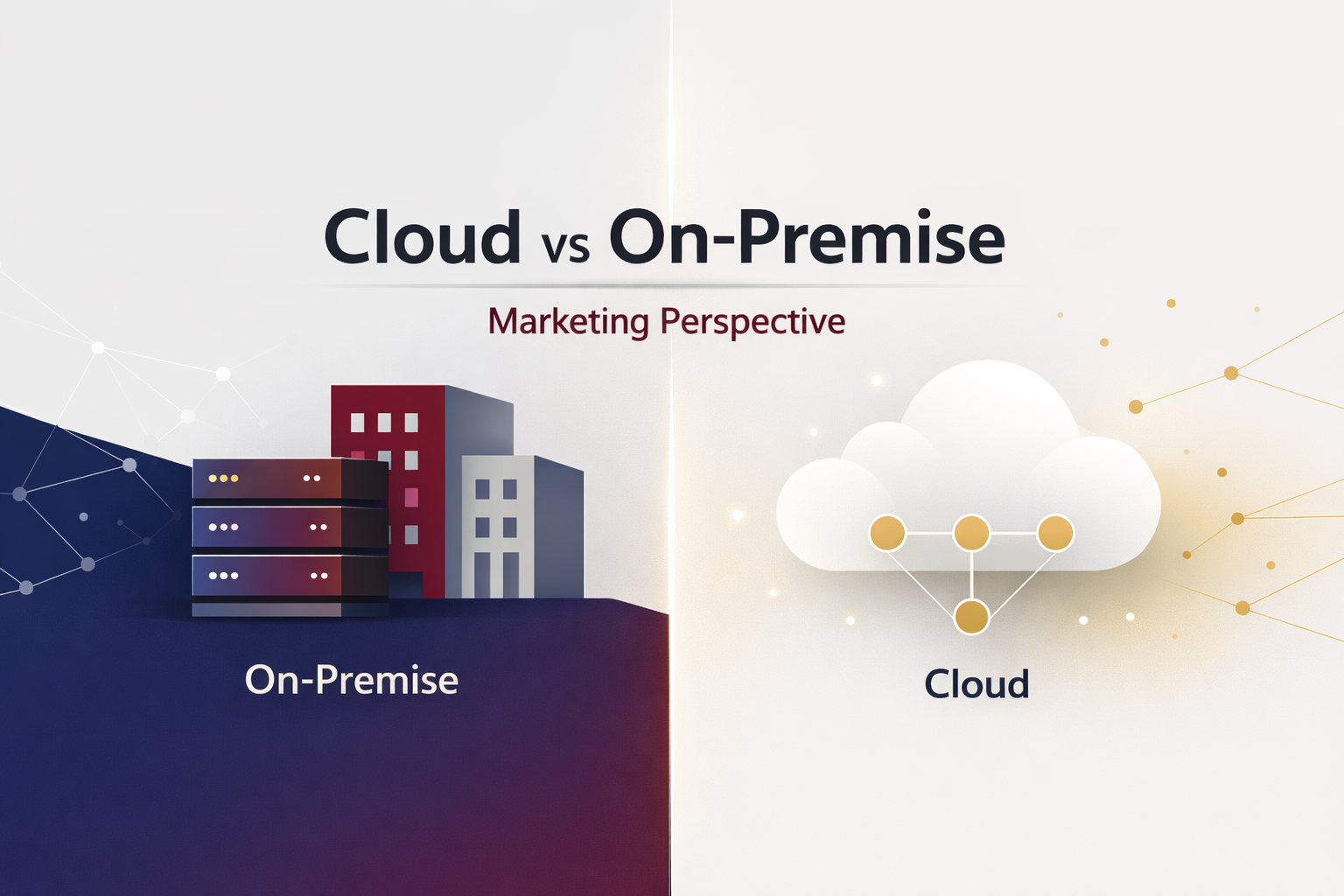
Fundamentally, Cloud vs. On-Premise distinguishes which party is in charge of governance, security, and operational management, as well as where an organisation’s digital systems, apps, and data are positioned.
What Is Cloud?
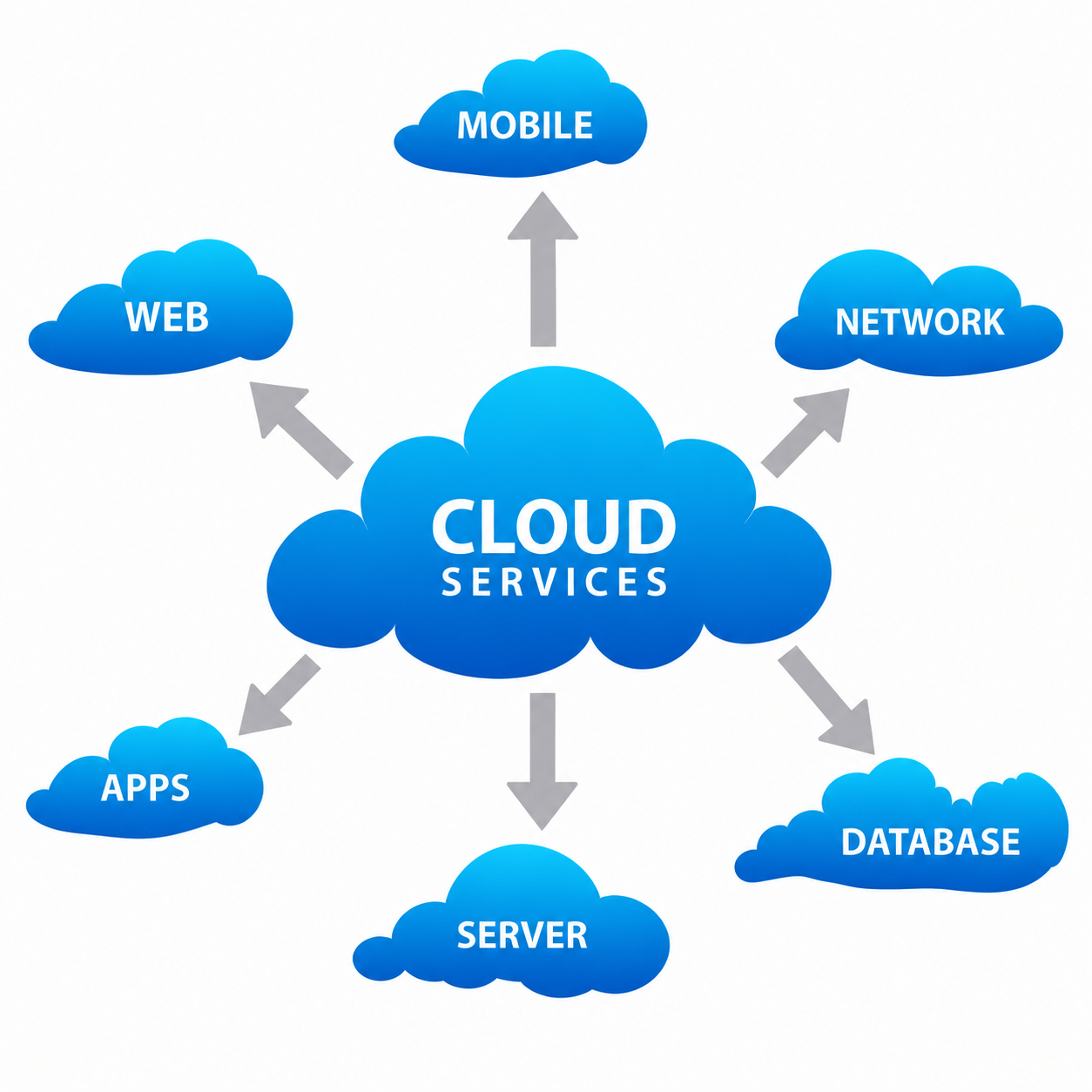
Picture by Stratophere
Cloud infrastructure entails hosting applications, databases, and enterprise systems on remote servers that are provisioned and maintained by third-party service providers, accessible via the internet. Prominent companies like Google Cloud, Microsoft Azure, and Amazon Web Services offer computing resources, storage, and software services that businesses can use without having to buy actual on-site servers.
Executive Overview
- Organisations leverage the provider’s infrastructure rather than owning physical hardware.
- Systems are remotely accessible, enabling geographically diverse and dispersed teams.
- Providers oversee redundancy, updates, maintenance, and security procedures.
Defining Attributes
- Access everywhere through internet connectivity.
- Flexible scalability to meet demand variations.
- Subscription or pay-as-you-go models, converting capital expenditure into operational expenditure.
- Maintenance, security, and upgrades are the responsibility of the provider.
What Is On-Premise?
On-premise infrastructure involves deploying and managing applications, databases, and enterprise systems on servers physically located within the organisation’s facilities, such as offices or private data centres. The corporation is solely responsible for security, configuration, installation, and ongoing maintenance.
Executive Overview
- The firm retains complete ownership of hardware and operational accountability.
- Systems are physically situated on-site and enable direct asset oversight.
- Internal teams are accountable for security management, system optimisation, and maintenance.
Defining Attributes
- Complete authority over digital and tangible resources.
- Substantial up-front capital investment for facility provisioning and hardware acquisition.
- Internal accountability for system upkeep, security, and updates.
- Scalability depends on hardware availability and requires additional capital expenditures for growth.
Why This Decision Matters for Digital Marketing?
Modern digital marketing is an ecosystem of interdependent systems. Advanced SEO execution, technical search engine optimisation, multi-channel online marketing, and integrated internet marketing campaigns rely on infrastructure that supports speed, data accuracy, and global accessibility.
Consider the operational demands of:
- Real-time reporting in Google Analytics.
- Automated bidding and optimisation in Google Ads.
- Scalable email marketing automation.
- Performance-based affiliate marketing tracking.
- Global content marketing distribution.
- High-volume blog writing and publishing.
- Coordinated social media marketing workflows.
Infrastructure underpins each of these functions. If it lacks elasticity or resilience, performance ceilings emerge.
The Cloud Model: Elasticity as Competitive Advantage
Cloud infrastructure offers strategic elasticity to businesses that are focused on expansion. When SEO efforts accelerate organic traffic, when content marketing generates viral engagement, or when paid campaigns scale aggressively, cloud environments expand capacity dynamically. This elasticity prevents performance degradation during peak demand.
Cloud computing transforms fixed infrastructure costs into variable operating expenses from a capital standpoint. Revenue generation and marketing expenditures are proportionate, which improves financial agility.
Additionally, cloud-native ecosystems make it easier to integrate marketing technologies, which enhances executive visibility and data coherence.
The On-Premise Model: Control and Capital Commitment
On-premise infrastructure offers structural sovereignty. Organisations retain direct oversight of systems, security frameworks, and data governance protocols.
This oversight can lower perceived compliance risk for businesses in highly regulated industries. Internal hosting may also be advantageous for highly customised marketing platforms or exclusive analytics setups.
However, on-premise systems introduce rigidity. Scaling requires capital expenditure. Managing the hardware lifecycle requires constant investment. Timelines for procurement may limit the speed of innovation. The strategic question for C-suite executives is whether control is worth the opportunity cost of less flexibility.
Infrastructure as Executive Leverage
Decisions about infrastructure have an impact beyond operational continuity. They shape:
- Speed-to-market for digital marketing initiatives.
- Reliability of search engine optimisation performance.
- Depth of insight from analytics systems.
- Global scalability of online marketing campaigns.
- Integration maturity across marketing platforms.
In an era where marketing performance directly impacts enterprise valuation, infrastructure is not merely technical architecture. It is strategic leverage.
Choosing the Right Approach
The choice depends on priorities:
Cloud works best for:
- Global SEO expansion.
- Scalable content marketing.
- Automation in email marketing.
- Performance-focused affiliate networks.
- Integrated social media management.
- Flexible, fast experimentation.
On-premise suits:
- Absolute data control.
- Regulatory compliance needs.
- Preference for owning infrastructure.
- Long-term, fixed-cost planning.
Executive Conclusion
The choice between cloud and on-premises essentially comes down to ownership, scalability, cost, and risk allocation. Cloud prioritises elasticity, integration, and financial flexibility. On the contrary, on-premise prioritises control, sovereignty, and fixed capital investment.
Neither model is inherently superior. The optimal choice depends on strategic alignment, growth ambition, regulatory exposure, and organisational risk appetite. For executive leadership, the decisive consideration is not where your servers sit. The question is whether your infrastructure limits or opens up possibilities.
Partner with Ivara Innovation for Scalable Marketing Success

At Ivara Innovation, we empower businesses to make strategic infrastructure choices that maximise marketing efficacy and unlock untapped growth potential. Our experts help you find solutions that seamlessly fit your organisational goals and expansion aspirations, whether you’re assessing the control and sovereignty of on-premise platforms or the agility and scalability of cloud ecosystems.
Don’t let inadequate infrastructure limit the effectiveness of your digital marketing. Collaborate with Ivara Innovation to transform your systems into dynamic strategic assets, driving faster execution, deeper insights, and scalable, high-performance marketing outcomes.