Ten years ago, a 500-person IT team often looked like a sign of growth. Today, a large team does not always mean greater efficiency.
The companies pulling ahead aren’t necessarily the ones with the biggest teams. Increasingly, they’re the ones with the smartest AI agents quietly working behind the scenes.
AI agents don’t simply assist IT teams. They can take on entire workflows, handle thousands of tasks, work across multiple systems, and keep going long after everyone else has gone home.
And that’s where things get interesting.
So, What Exactly Is an AI Agent?
Forget everything Hollywood has taught you about artificial intelligence.
An AI agent isn’t a humanoid robot walking around an office. It’s something far more useful: a digital worker that can understand what’s happening, figure out what needs to be done, and then actually do it.
A regular chatbot is a bit like a vending machine. You press a button, and you get a response.
An AI agent is more like that exceptionally capable colleague who doesn’t wait to be told every little thing. They look at the situation, understand the goal, figure out the next step, and get to work.
For example, a chatbot might tell an employee how to reset a password. An AI agent could verify the request, reset the password, update the relevant system, and let the employee know it’s done.
In IT companies, which build software, manage networks, support clients, and keep the digital world running, AI agents are not some distant future..
They’re already here.
Here are ten ways they’re changing the game.
1. They Handle the Work Nobody Wants to Do
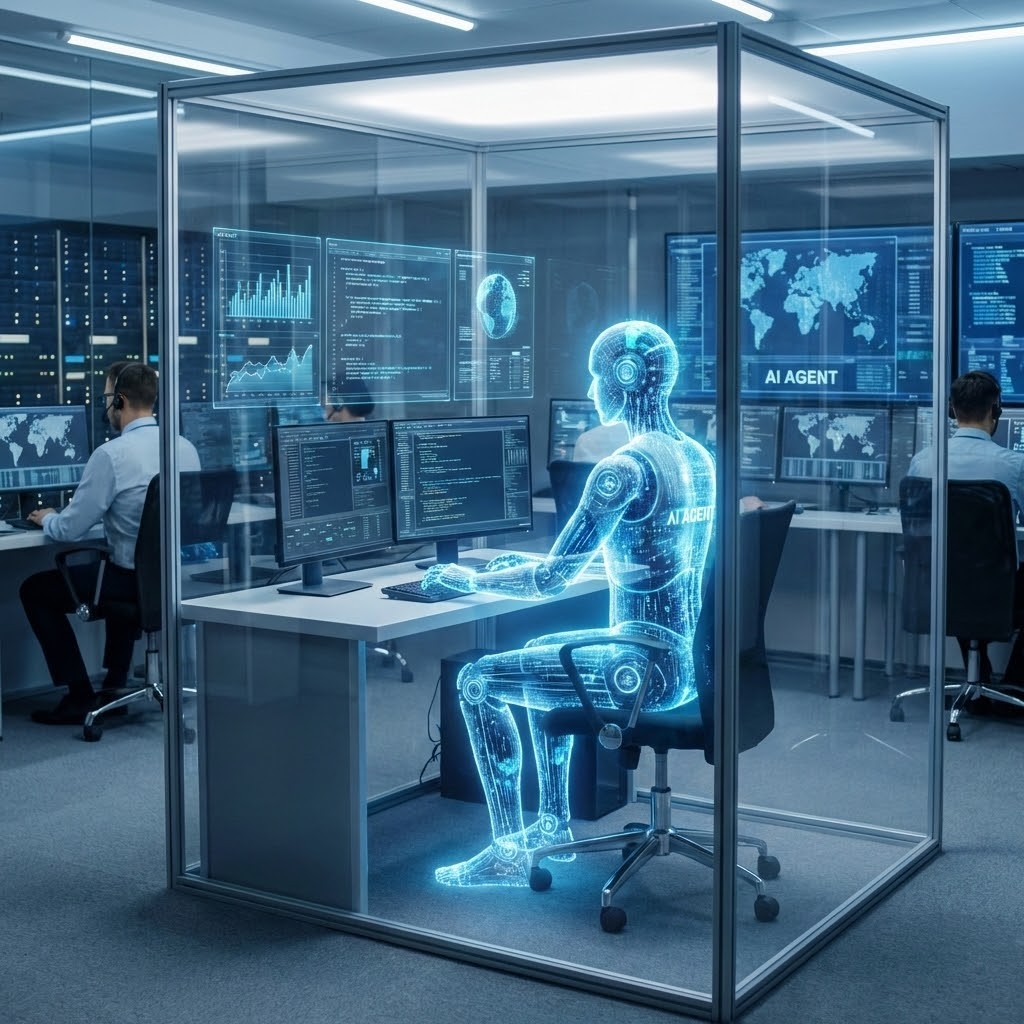
Here’s the uncomfortable truth: most IT companies aren’t only competing against other IT companies. They’re competing against software. Beneath the exciting surface of every technology business sits a mountain of repetitive work. Resetting passwords. Moving data between systems. Creating the same weekly report. Checking the same alerts. Updating the same records. None of this work is particularly difficult. But it eats away at hours that highly skilled people could spend doing something far more valuable.
AI agents can absorb a large part of this workload. They can work continuously, follow defined processes, and take care of routine tasks without needing someone to manually trigger every step. And the ripple effect is significant. Engineers get to engineer. Strategists get to think strategically. Support teams get to focus on customers who actually need human help. The whole company gets a little more room to breathe.
Here’s the analogy that really nails it:
Hiring a brilliant chef and making them wash dishes for six hours a day is a tragic waste of talent. AI agents are the dishwasher. An exceptionally capable, never-complaining one.
2. They Have Retired the Phrase “Sorry, We Are Closed”
Picture this.
It’s midnight. A major client has just experienced a critical system failure. Their team is panicking. And on the IT company’s side? The support team finished three hours ago.
Not long ago, that was simply the reality of running an IT business. Today, it does not have to be. AI agents can act as an always-available first line of support. They can understand a customer’s problem, look up relevant information, work through common issues, and resolve many requests without waiting for a human agent. When the problem genuinely needs human expertise, the AI can hand it over with the relevant history and a summary already prepared.
That last part matters. The human doesn’t have to start from:
“Okay, so can you explain what happened?”
They can start from:
“I know what happened. Let’s fix it.”
Companies are already exploring this kind of AI-powered support at scale. However, the exact percentage of requests an AI agent can resolve will vary widely depending on the company, systems, and type of support involved.
The bigger point is simpler:
Your support operation doesn’t have to sleep just because your employees do.
3. They Make Every Developer Faster and More Confident
Building software is hard. There are thousands of lines of code, endless dependencies, bugs that appear out of nowhere, and that one tiny error that somehow manages to bring an entire application crashing down.
AI agents and coding assistants are changing how developers deal with this complexity. Tools such as GitHub Copilot and Claude can help developers write code, explain unfamiliar functions, identify potential problems, create tests, and build entire sections of an application from a simple description.
Work that once took hours can sometimes be completed in minutes. But there’s an important distinction here. AI doesn’t magically turn an inexperienced developer into a senior engineer. It gives developers a powerful assistant.
The developer still needs to understand the system, review the code, make architectural decisions, and catch the mistakes AI inevitably makes. When used properly, however, the effect can be impressive.
Developers spend less time fighting repetitive tasks and more time solving the problems that actually require their expertise. When developers can build faster without sacrificing quality, the entire business moves faster too. Features reach customers sooner, ideas move from the whiteboard to reality faster, and problems that once took days to solve can often be tackled in far less time.
4. They Guard the Digital Gates With Superhuman Vigilance
Real cyberattacks rarely look like something from a Hollywood movie. There isn’t always a dramatic warning on a giant screen. Often, attacks are quiet. A strange login. An unusual data transfer. A suspicious connection. A small change in behaviour buried among thousands of completely normal events. By the time a human analyst notices something unusual, the damage may already have started.
AI agents can help change that. They can monitor huge volumes of system activity, learn what normal behaviour looks like, and flag unusual patterns as they appear. Depending on the system, an AI agent can then investigate the event, alert the security team, or trigger predefined actions to contain the threat. Think of it this way:
A human security team might be watching ten cameras. An AI system can watch thousands. It doesn’t get tired. It doesn’t need a coffee break. And it doesn’t look away because something else happened on another screen. That doesn’t mean humans disappear from cybersecurity.
Quite the opposite.
Security professionals still need to decide what actions an AI agent can take, investigate serious incidents, and make high-risk decisions. The AI watches the gates. Humans decide what happens when something gets through.
5. They Keep the Lights On Automatically
Servers struggle. Databases slow down. Networks wobble. Applications suddenly consume far more resources than expected. When these things happen, every minute of downtime can cost money and, more importantly, customer trust.
AI agents can continuously monitor infrastructure and look for signs that something isn’t right. For example, an agent might notice that a server is using unusual amounts of memory. It could investigate related systems, identify a likely cause, notify the right person, or trigger a predefined response.
This is where the idea of self-healing infrastructure becomes interesting.
Instead of waiting for someone to notice a problem and then react to it, systems can increasingly detect and respond to certain problems themselves.
It’s not magic.
It’s monitoring, decision-making, and automation working together. And for IT teams, that can mean fewer fires to put out.
6. They Turn Overwhelming Data Into Clear Answers
IT companies generate an absurd amount of data. Server logs, customer tickets, performance metrics, security alerts, cloud usage, financial reports, and project data are constantly being created and stored across different systems.
The problem isn’t that businesses don’t have enough information. It’s that they have too much of it. Most teams simply don’t have enough time to examine every useful piece of information sitting inside their systems. Important details can easily get buried in logs, spreadsheets, dashboards, and reports.
That’s where AI agents can make a real difference. They can process large amounts of data, identify patterns, connect information from different sources, and turn the results into summaries that people can actually understand.
Suddenly, questions like “Why did our application crash on Tuesday?” or “Where are we spending too much on cloud infrastructure?” don’t necessarily require someone to spend an entire week digging through spreadsheets and logs.
The answer might already be sitting somewhere inside the company’s systems. The problem is simply finding it. AI agents can help bring that information to the surface.
7. They Bring Order and Warmth to Hiring
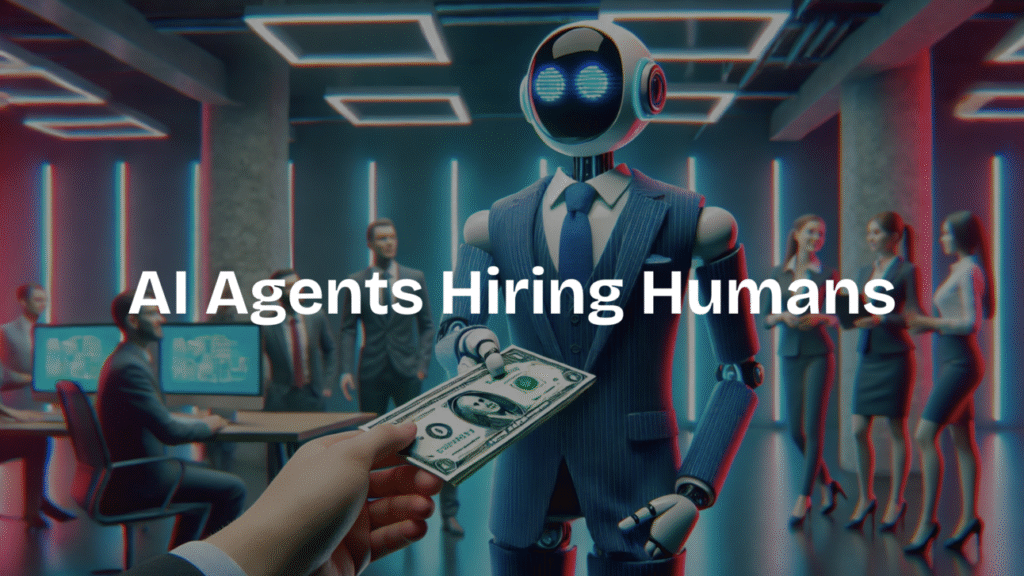
Fast-growing IT companies know how time-consuming hiring can be. Hundreds of CVs, endless emails, interview scheduling, candidate questions, and follow-ups can quickly overwhelm HR teams.
AI agents can take care of much of this administrative work. They can organise applications, schedule interviews, answer common questions, send reminders, and even help new employees during onboarding by guiding them to information about logins, equipment, policies, and payroll.
AI shouldn’t decide who gets hired on its own. Hiring still requires human judgment. But when AI handles the repetitive work, HR teams have more time for what matters most: talking to people.
8. They Are the Project Coordinator Who Never Drops the Ball
Something always slips in software projects. A deadline gets missed, a stakeholder doesn’t get an update, a task gets stuck, or someone forgets to follow up. Suddenly, a small delay has turned into a much bigger problem.
AI agents can act like an extra pair of hands for project managers. They can track tasks, monitor deadlines, send reminders, prepare status updates, and flag potential problems before they become emergencies. For example, if one delayed task is likely to affect three others, an AI agent can bring that problem to the project manager’s attention.
That doesn’t replace the project manager. It simply gives them fewer administrative headaches. Instead of spending half the day chasing updates, they can focus on what humans are much better at: making decisions, solving problems, managing relationships, and keeping the team moving in the right direction.
AI handles the follow-up. The project manager handles the judgment.
9. They Unlock Efficiency That Once Seemed Out of Reach
Operating an IT company is expensive. Salaries, cloud infrastructure, software licences, security, support, and training all add up. AI agents won’t make these costs disappear, but they can help existing teams handle more work without requiring a proportional increase in headcount.
A support team can handle more customers, developers can ship more features, and operations teams can monitor more systems. The goal isn’t simply to replace people with AI. It’s to give the people you already have more leverage.
The research supports the potential. McKinsey reports that agentic AI can reduce infrastructure costs by 20 to 40 percent in initial deployments, while also improving delivery speed and operational efficiency.
10. They Turn Ambitious Ideas Into Buildable Realities
This might be the most exciting part. For most of the industry’s history, what a company could build was closely tied to the size of its team. More developers meant more capacity, more designers meant more output, and more support staff meant more customers.
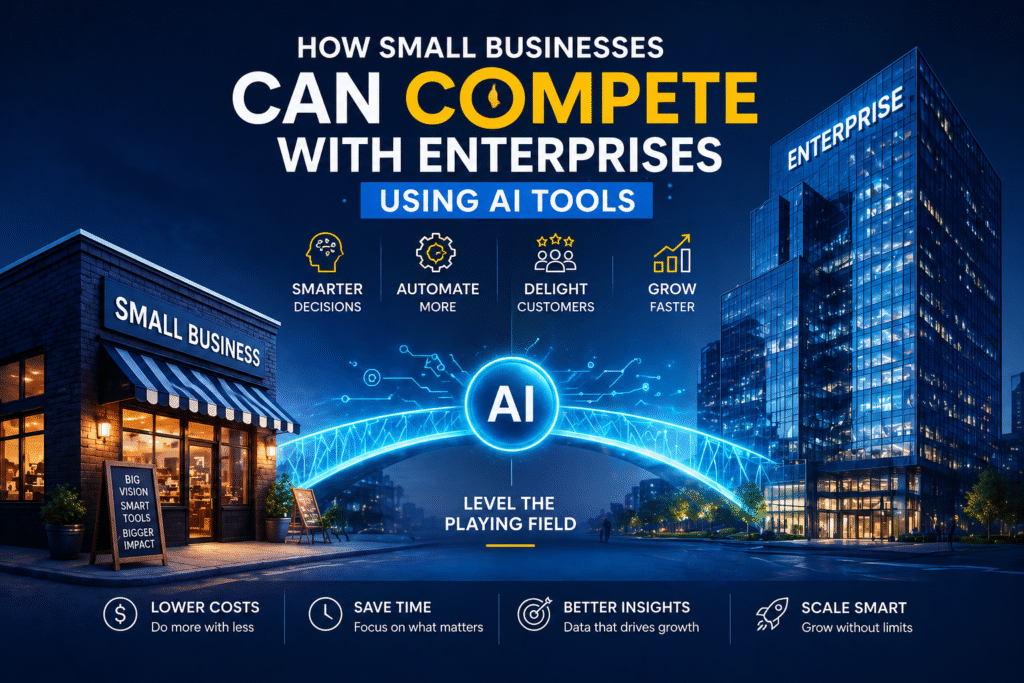
AI agents are starting to loosen that relationship. A small team with the right AI tools can now get support with coding, testing, research, documentation, analysis, customer support, and operations. That doesn’t mean a five-person startup can automatically replace a team of fifty, but it does mean a small team can potentially accomplish far more than it could before. And that changes the conversation. Ideas that once died in planning meetings because they were too expensive or too time-consuming can become worth exploring. Prototypes can be built faster, new features can be tested sooner, and small businesses can automate processes that once required an entire department. This isn’t just about efficiency.
It’s about expanding what is possible.
Why This Matters to All of Us
AI agents aren’t some distant technology waiting to arrive. They’re already finding their way into the apps we use, the websites we visit, and the software businesses rely on every day. For IT companies, that makes the question less about whether AI agents will matter and more about how they should use them. And there’s an important difference: using AI everywhere isn’t a strategy. The real opportunity is finding the right problems for AI to solve. A repetitive process can be automated. A mountain of data can be analysed with AI. A support team drowning in routine requests can use an AI assistant, while a developer spending hours on repetitive coding can use AI-powered tools to work more efficiently. However, when a decision requires empathy, creativity, accountability, or deep human judgment, that’s where people still matter most.
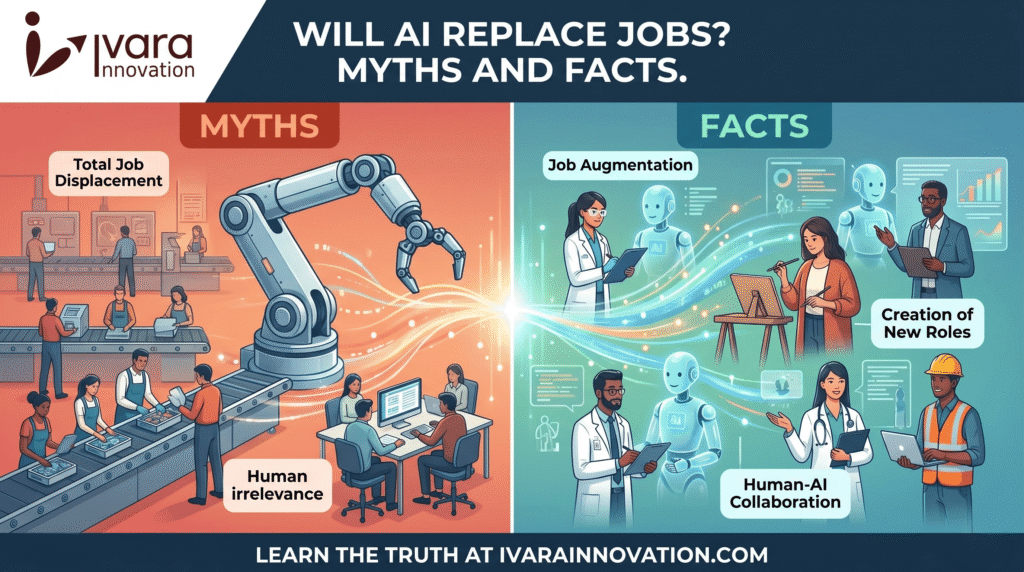
The future of IT isn’t humans versus machines. It’s humans with machines. AI agents can handle the work they are good at, while people focus on the work that requires experience, creativity, judgment, and human connection. And that partnership isn’t on the horizon. It’s already here. And it’s just getting warmed up.
Ready to Lead the Shift?
The organizations that thrive over the next decade will not necessarily be the ones with the biggest teams or the largest AI budgets. They will be the ones that figure out where AI can genuinely make their business better, and then act on it. At Ivara Innovation, we work with forward-thinking businesses to design, deploy, and scale AI agent solutions tailored to their specific systems, customers, workflows, and ambitions. Whether you are exploring intelligent automation for the first time or looking to advance an existing AI strategy, the right approach can help your team work smarter without losing the human expertise that makes your business valuable.
The future isn’t something that simply happens to your business. With the right technology, strategy, and partner, it’s something you can architect.