Artificial Intelligence (AI) is transforming industries at an unprecedented pace. From customer service chatbots to AI-powered content creation and data analysis, businesses are embracing automation to improve efficiency and reduce costs. Naturally, this has led to one of the biggest questions of our time:
“Will AI replace human jobs?”
The short answer is no, but it will change how we work.
While some repetitive tasks are becoming automated, AI is also creating entirely new career opportunities and helping professionals become more productive than ever before. Rather than replacing every worker, AI is reshaping jobs, changing skill requirements, and encouraging businesses to rethink the way work gets done.
In this article, we’ll separate common myths from reality and explore what AI really means for the future of work.
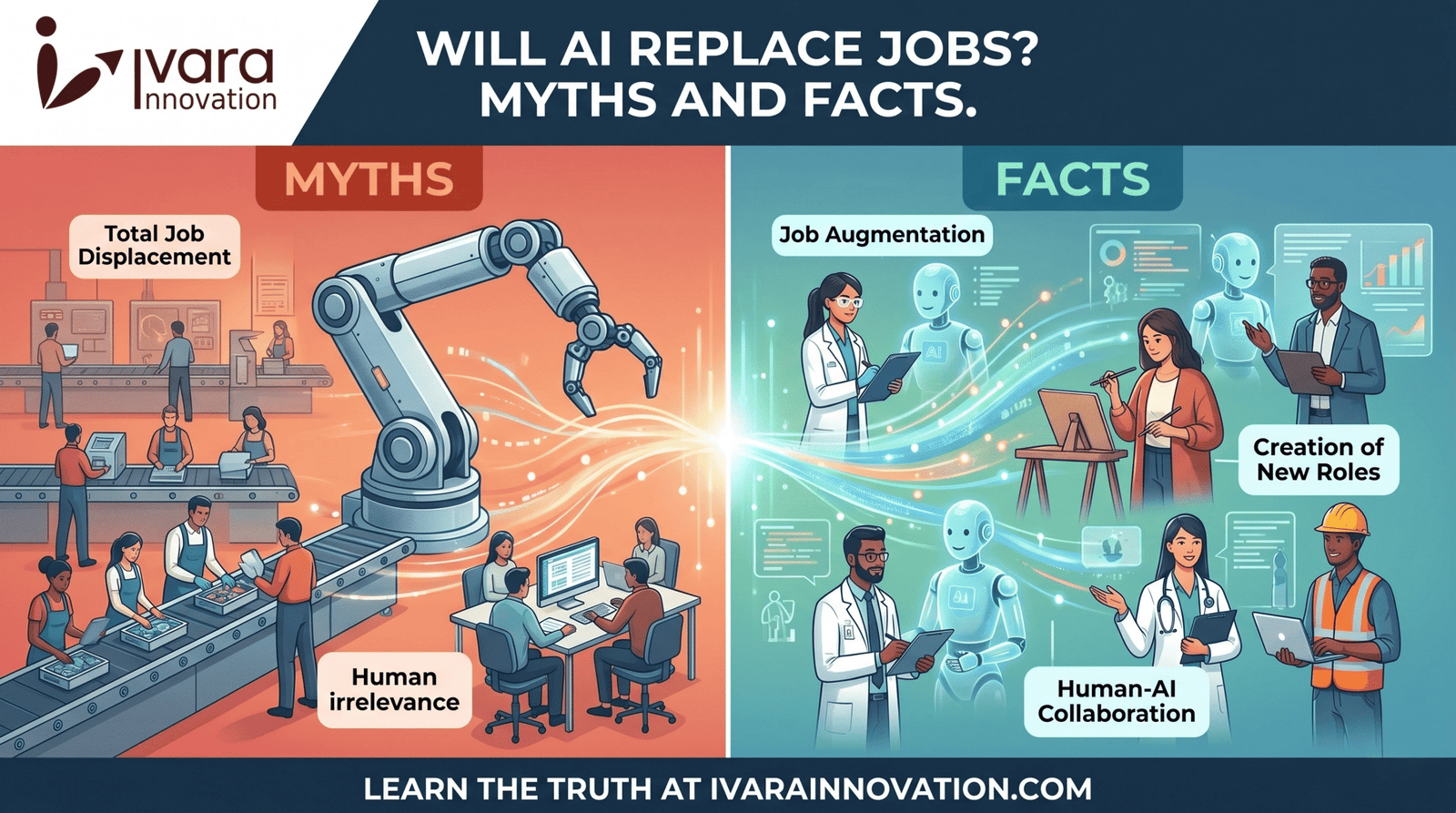
Myth 1: AI Will Replace Every Job
Many headlines make it sound as though robots and AI systems will soon take over every profession. In reality, this is highly unlikely.
Most jobs consist of multiple tasks rather than a single responsibility. AI is excellent at automating repetitive, data-driven, and predictable tasks, but it still struggles with creativity, emotional intelligence, leadership, strategic thinking, and complex decision-making.
For example, AI can help a marketing team generate content ideas, but it cannot fully replace the creativity needed to build a memorable brand or understand customer emotions.
Instead of replacing entire jobs, AI is more likely to take over specific tasks, allowing professionals to focus on work that requires human judgment and innovation.
How Businesses Can Adapt
- Identify repetitive tasks that AI can automate.
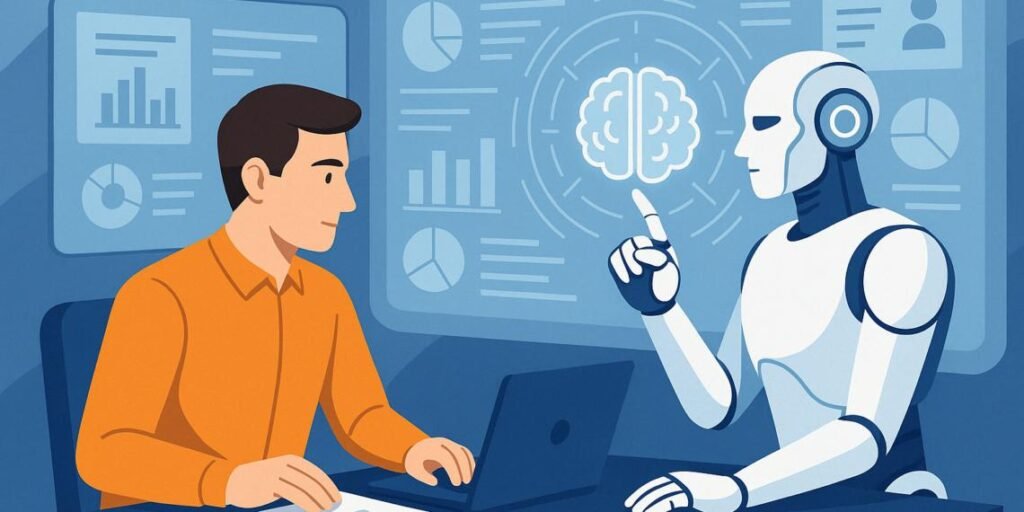
- Use AI as a productivity tool rather than a replacement for employees.
- Invest in employee training so teams can work effectively alongside AI.
Myth 2: Only Low-Skilled Jobs Are at Risk
A common misconception is that AI only threatens entry-level or manual jobs. The reality is much broader.
AI can automate structured tasks regardless of seniority or industry. Administrative assistants, accountants, customer support teams, software developers, marketers, and even legal professionals are already using AI to handle routine work.
However, AI rarely replaces the entire role. Instead, it changes how professionals spend their time.
For instance:
- Accountants use AI to automate bookkeeping while focusing on financial planning.
- Lawyers use AI to review contracts faster while concentrating on legal strategy.
- Designers use AI to generate concepts before refining them with creativity and expertise.
The professionals who learn to use AI effectively often become more valuable, not less.
Myth 3: AI Will Eliminate More Jobs Than It Creates
History tells a different story.
Every major technological revolution, from the Industrial Revolution to the rise of the internet, eliminated certain jobs while creating entirely new industries.
AI is following the same pattern.
Today, organizations are hiring for roles that barely existed a few years ago, including:
- AI Engineers
- Prompt Engineers
- Machine Learning Specialists
- AI Trainers
- AI Ethics Consultants
- AI Implementation Specialists
- Automation Consultants
- Data Governance Experts
As businesses adopt AI, they also need people who can manage, monitor, improve, and govern these systems responsibly.
The future isn’t simply about fewer jobs; it’s about different jobs. Workers will benefit most from reskilling toward more complex, judgment-heavy, or human-facing roles.
What Jobs Will AI Transform?
Rather than replacing workers completely, AI is changing the way many professions operate.
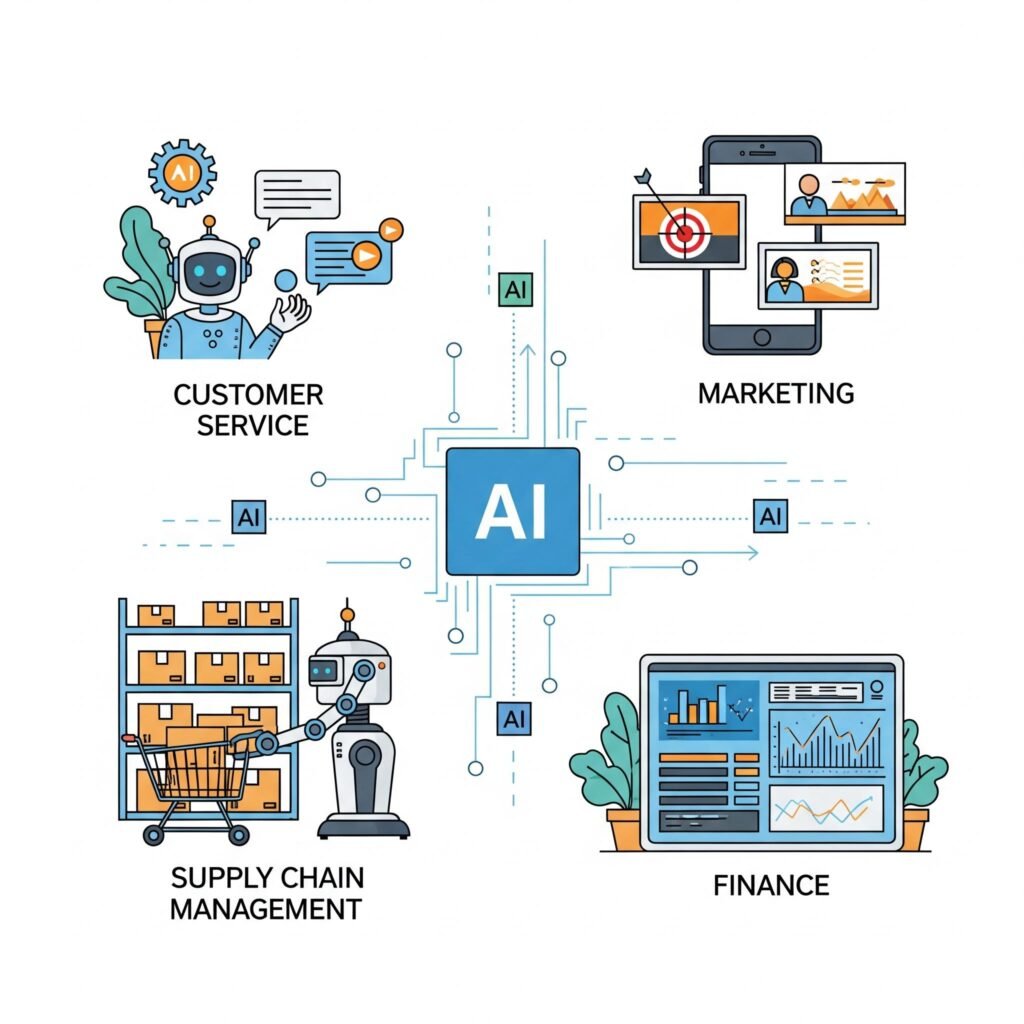
Customer Service
AI chatbots can answer common questions 24/7, allowing human agents to focus on complex issues that require empathy and problem-solving.
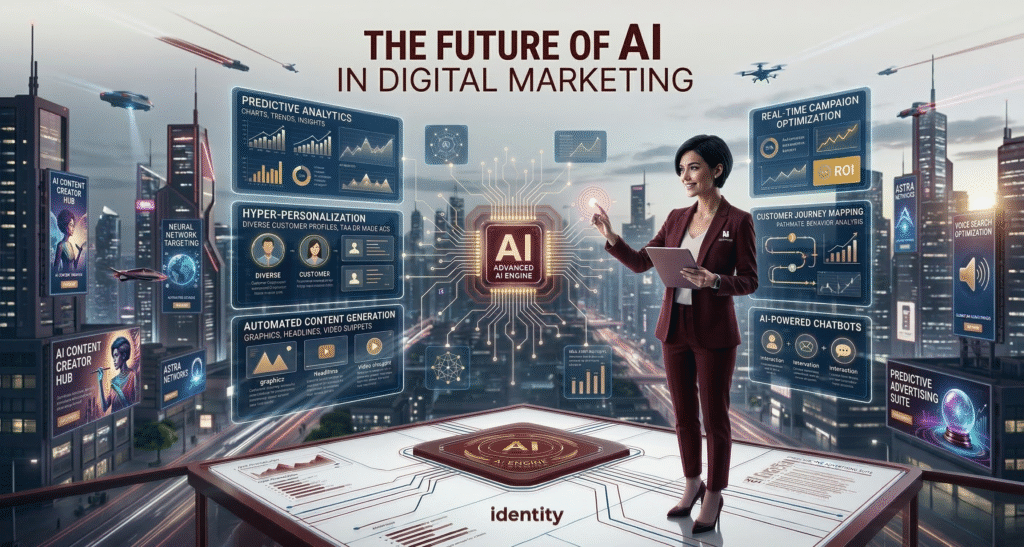
Marketing
AI can generate content ideas, analyze campaign performance, and assist with SEO research. Marketers still provide strategy, creativity, and brand direction.
Healthcare
Doctors use AI to analyze medical images and support diagnoses, but patient care, communication, and treatment decisions remain firmly in human hands.
Finance
Financial professionals increasingly rely on AI for fraud detection, forecasting, and reporting while continuing to provide strategic advice and business insights.
The most successful professionals won’t compete with AI; they’ll collaborate with it.
Which Jobs Face the Greatest Automation Risk?
AI is most effective when work is repetitive, predictable, and based on clear rules.
Jobs that may experience significant automation include:
- Data entry
- Basic administrative work
- Routine bookkeeping
- Template-based content writing
- Basic customer support
- Simple coding tasks
- Standard translation services
Even in these fields, complete replacement is unlikely. Human oversight, quality control, and decision-making remain essential.
The biggest advantage comes from learning complementary skills that AI cannot easily replicate.
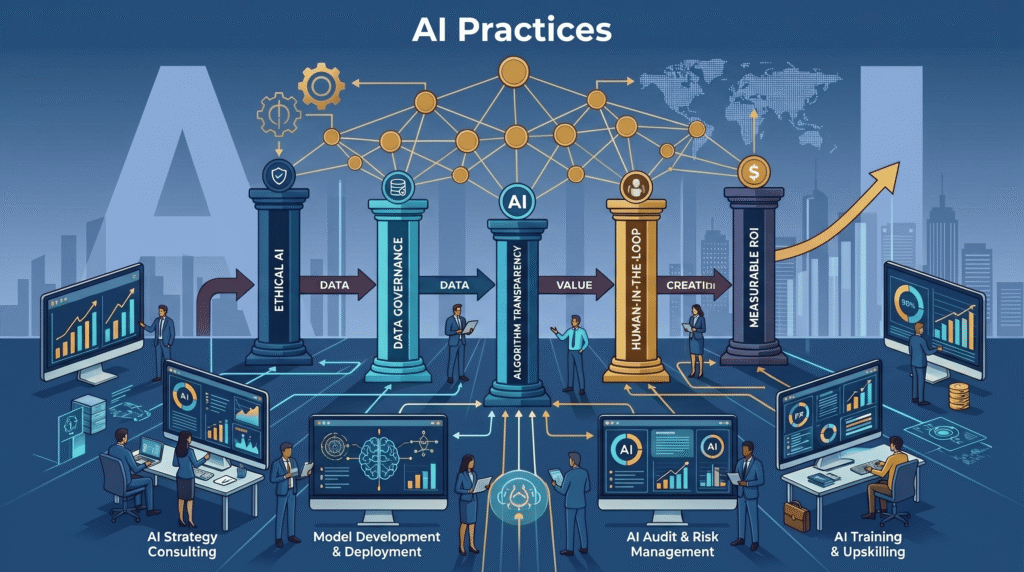
How Businesses Can Prepare for an AI Future
Organizations that successfully adopt AI focus on empowering employees rather than replacing them.
Here are a few practical steps:
- Identify repetitive processes suitable for automation.
- Train employees to use AI tools responsibly.
- Establish clear guidelines for ethical AI use.
- Encourage collaboration between people and AI systems.
- Continuously upskill teams to meet evolving business needs.
Companies that combine human expertise with AI capabilities are likely to gain the greatest competitive advantage.
Myths vs Facts at a Glance
| Myths | Reality |
| AI will replace every job. | AI mainly automates tasks, not entire careers. |
| Only low-skilled jobs are affected | Both entry-level and professional roles are evolving. |
| AI destroys more jobs than it creates. | AI is creating new industries and career paths. |
| Humans will become unnecessary. | Human creativity, empathy, and judgment remain essential. |
| AI works independently. | AI performs best when combined with human expertise. |
Final Thoughts
AI is not the end of human work; it is the beginning of a new way of working.
While some routine tasks will become automated, the demand for creativity, critical thinking, emotional intelligence, and strategic decision-making will continue to grow. Businesses that embrace AI responsibly can increase productivity, improve customer experiences, and unlock new opportunities, while professionals who develop AI-related skills will be better equipped for the future.
Rather than asking, “Will AI replace my job?”, a more valuable question is:
“How can I use AI to become better at what I do?”
The future belongs to those who adapt, learn continuously, and view AI as a powerful tool for innovation, not as a replacement for human potential.