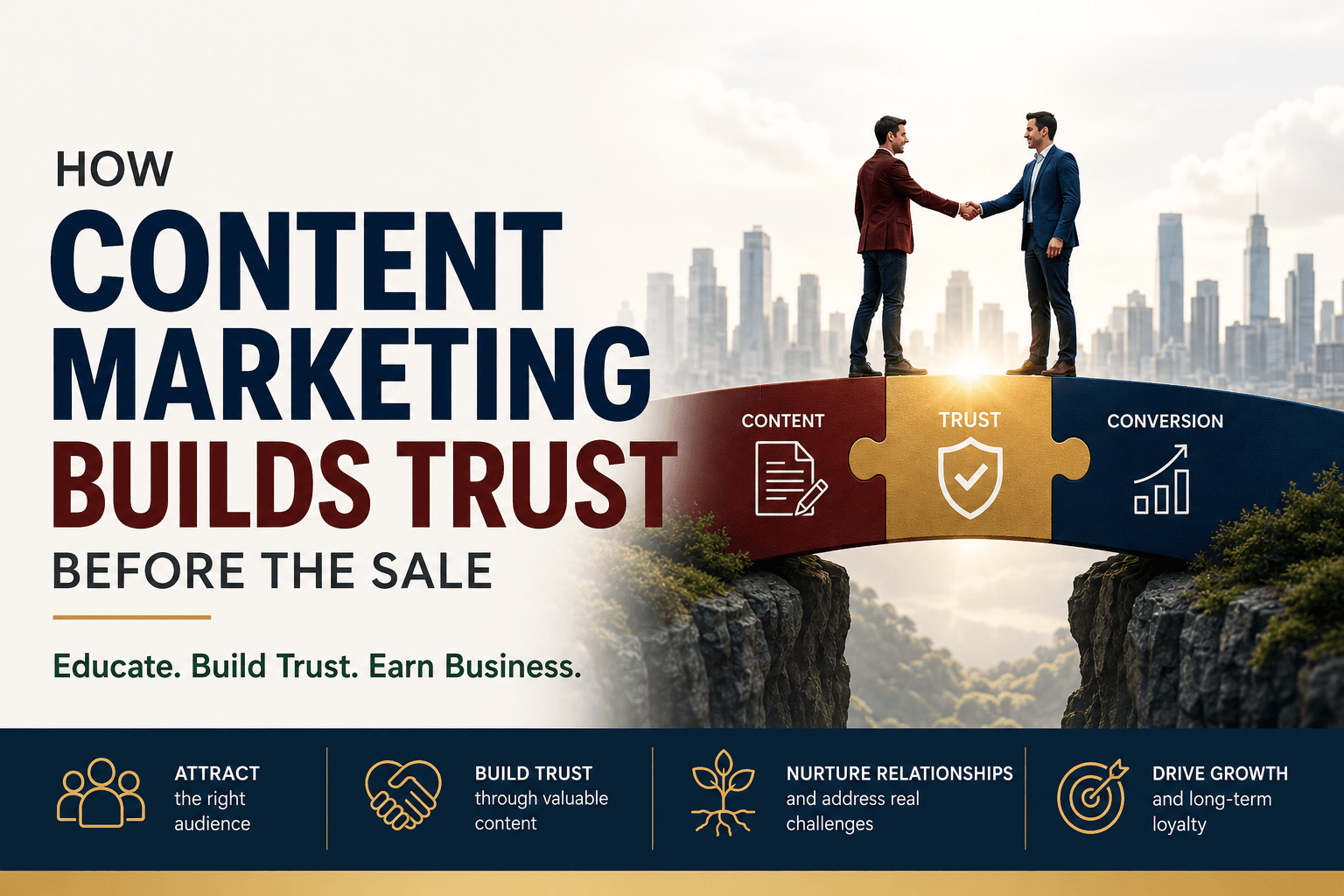
Content marketing is one of the most effective ways to build trust with potential customers. Instead of pushing for an immediate sale, it focuses on providing valuable information that educates, solves problems, and answers questions. By consistently delivering helpful content, businesses establish credibility, strengthen relationships, and position themselves as trusted industry experts. As trust grows, prospects become more confident in choosing your products or services, making the sales process more natural and effective.
1. Blogs: Solve Real Customer Problems
Blog articles are an excellent way to address your audience’s most common challenges while demonstrating your expertise. Publishing practical, solution-focused content helps attract organic traffic through search engines and gives readers a reason to keep returning to your website.
For example, a post such as “5 Ways to Streamline Your Workflow” provides immediate value while showcasing your knowledge.
Why it works:
- Improves search engine visibility (SEO)
- Builds credibility through consistent education
- Encourages repeat visits and long-term engagement
Best Practice: Publish at least one high-quality blog post each week, targeting keywords your audience actively searches for.
2. Educational Content: Teach Before You Sell
Educational content helps audiences learn something useful without expecting an immediate purchase. This can include social media posts, short videos, infographics, guides, or carousel posts that simplify complex topics.
For instance, a short guide titled “Budgeting for Small Business Growth” positions your brand as a helpful advisor rather than just another seller.
Why it works:
- Provides immediate value
- Increases shares and organic reach
- Builds authority and audience trust
Best Practice: Create bite-sized educational content for platforms like LinkedIn, Instagram, or Facebook, then repurpose your best-performing pieces into email newsletters or blog posts.
3. FAQs: Remove Doubts Before They Become Objections
Frequently Asked Questions (FAQs) address customer concerns before they become barriers to conversion. By providing clear answers about pricing, security, shipping, policies, or product features, you reduce uncertainty and increase buyer confidence.
Questions such as “How secure is your payment process?” reassure visitors and make purchasing decisions easier.
Why it works:
- Reduces customer hesitation
- Lowers support requests
- Improves website conversions
Best Practice: Gather questions from customer support, sales conversations, and feedback forms. Review and update your FAQ page regularly to keep it accurate and relevant.
4. Case Studies: Let Success Stories Build Credibility
Case studies provide real-world proof that your products or services deliver measurable results. By sharing customer success stories, including challenges, solutions, and outcomes, you help prospects visualize similar success for their own businesses.
For example, “How We Increased Sales by 40% for a Local Retailer” demonstrates tangible value backed by evidence.
Why it works:
- Builds trust through real customer experiences
- Demonstrates measurable business impact
- Supports sales conversations with proof
Best Practice: Publish a new case study each month and include specific metrics, customer testimonials, and before-and-after results whenever possible.
5. Thought Leadership: Become the Trusted Industry Voice
Thought leadership content goes beyond answering common questions by offering original insights, industry analysis, expert opinions, or future trends. Formats may include long-form articles, webinars, podcasts, keynote presentations, or research reports.
Sharing informed perspectives helps establish your brand as an authority and differentiates you from competitors.
Why it works:
- Positions your business as an industry expert
- Builds long-term brand credibility
- Supports premium pricing and customer confidence
Best Practice: Contribute guest articles to reputable industry publications and host webinars or live sessions to engage directly with your audience.
Content Marketing Methods at a Glance
| Content Type | Primary Trust Benefit | Best Use Case |
| Blogs | Educates and builds long-term credibility | SEO, website traffic, lead nurturing |
| Educational Content | Delivers quick, practical value | Social media engagement and brand awareness |
| FAQs | Removes objections and reduces uncertainty | Website conversions and customer support |
| Case Studies | Establishes industry authority | Sales enablement and lead conversion |
| Thought Leadership | Establishes industry authority | Brand positioning and long-term growth |
Conclusion
Successful content marketing is built on delivering value before asking for a sale. By educating, informing, and addressing customer concerns, businesses create meaningful relationships based on trust rather than promotion.
If you’re just getting started, focus on publishing consistent blog content and maintaining a comprehensive FAQ page. As your strategy grows, incorporate educational content, customer case studies, and thought leadership to strengthen your authority and attract higher-quality leads. Measure performance through engagement, website traffic, and lead generation, then refine your content strategy based on what resonates most with your audience.
When your audience consistently finds value in your content, trust follows, and trust is what ultimately drives loyalty, conversions, and sustainable business growth.