A successful blog is more than a collection of words published on a website. It is tool for attracting the right audience, answering their questions, building trust, and encouraging meaningful action.
In 2009, Airbnb was teetering on the edge of bankruptcy. They had dozens of property listings online, but potential guests rarely converted into bookings. When the founders investigated, they realized the root problem wasn’t their service, it was their content. Their listings featured blurry, low-resolution photographs accompanied by dry, uninspired titles like “Room for rent.” They failed to solve the primary barrier for online travelers: trust and clarity.

By replacing low-quality pictures with professional photography and rewriting their property descriptions to emphasize value, Airbnb’s weekly revenue instantly doubled. They didn’t change their core service offerings; they transformed how their content was written and presented, catalyzing their path to a billion-dollar valuation.
Creating content in today’s competitive digital environment demands more than solid writing skills. A well-crafted blog must attract qualified search traffic, establish authority, and compel readers to take action.
1. Know Your Audience and Address Their Exact Needs
High-impact blogging is never about your company, it’s about solving problems for the person reading your content. To publish articles that rank and convert, shift from guessing what your audience wants to researching their specific questions, pain points, and intent.
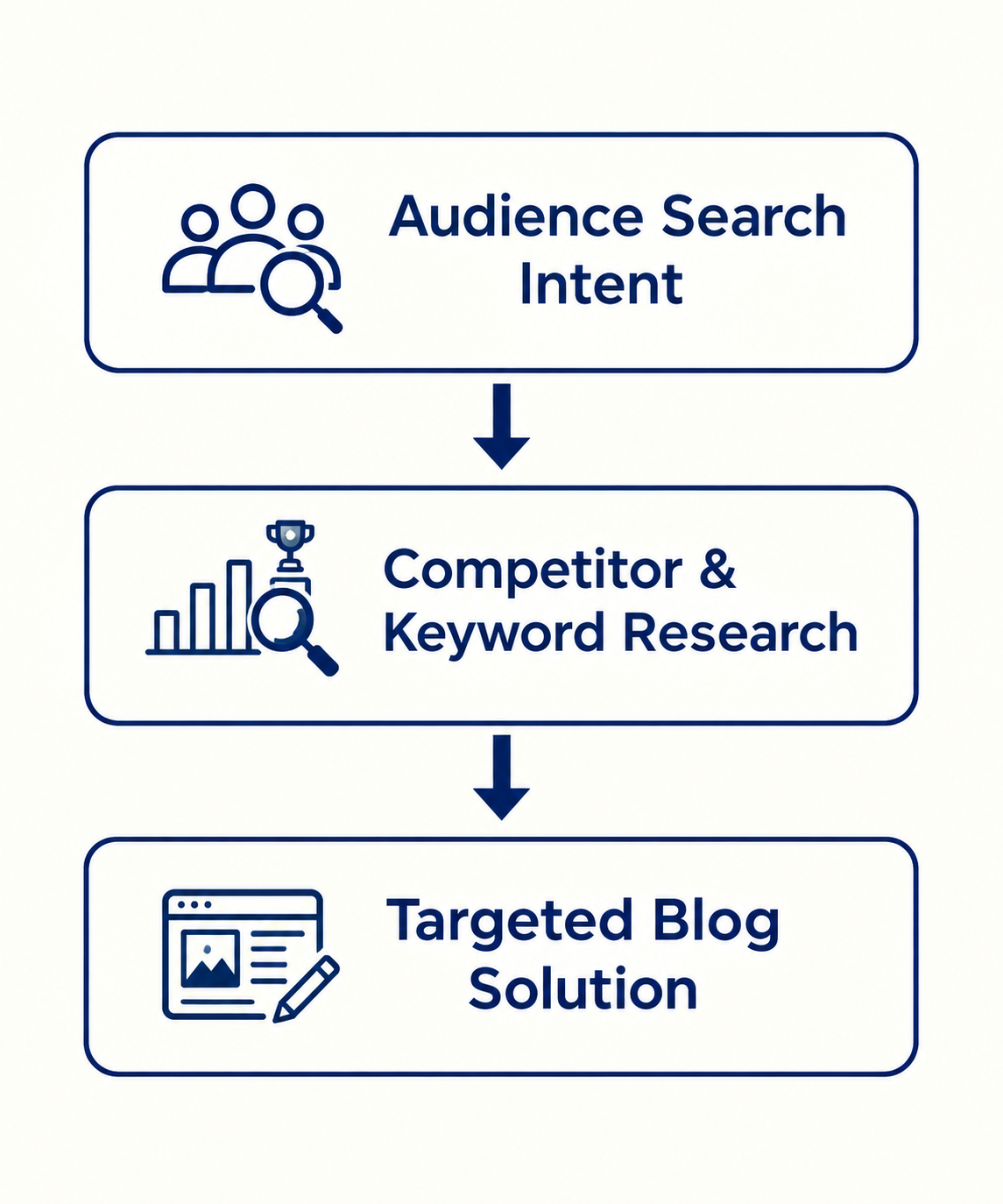
Building content around user intent requires systematic research:
- Identify Search Intent: Use keyword tools to uncover exact phrases your ideal clients search for during late-night research sessions.
- Analyze Competitors: Review top-ranking articles in your niche to identify content gaps you can address better.
- Outline for Clarity: Draft logical structures before writing to maintain topic focus and reader flow.
2. Craft High-CTR Headlines
Your headline acts as a digital handshake. It determines whether a reader clicks through to your site or continues scrolling through search engine results pages (SERPs).
Pro Tip: A strong headline combines clear value, reader curiosity, and target search terms without resorting to clickbait.
To increase your Click-Through Rate (CTR), incorporate these proven headline components:
- Include Numbers and Data: Readers prefer predictable formats (e.g., “7 Ways to Increase Blog Conversions”).
- Use Action-Oriented Terms: Words like “Proven,” “Step-by-Step,” or “Essential” set precise expectations.
- Incorporate Target Keywords: Place your focus keyphrase near the beginning of the title to assist search engines in indexing your content accurately.
3. Master Storytelling to Build Emotional Connection
Narratives turn passive readers into active customers. Storytelling transforms dry factual data into memorable insights that foster trust.
When structuring narrative elements in business blogging:
- Establish the Friction: Begin with a struggle your target audience recognizes.
- Build Momentum: Highlight challenges or failed approaches to build relatable context.
- Deliver the Resolution: Present your methodology or product as the clear, practical solution.
4. Write for Readers, Optimize for Search Engines
Balancing human readability with search engine crawler demands is essential. Search engines rank your content, but humans make buying decisions.
| Optimization Focus | Best Practices |
| Search Intent | Answer primary questions thoroughly near the top of the post. |
| Header Structure | Use H1, H2, and H3 tags hierarchically to map out subtopics. |
| Linking Strategy | Include internal links to relevant service pages and external links to trusted sources. |
| Meta Tags | Write descriptive meta titles and meta descriptions that incorporate focus keyphrases naturally. |
5. Format Content for Maximum Scannability
Online audiences scan content before reading it word-for-word. A cluttered layout causes visitors to bounce back to search results, negatively impacting dwell time.
Apply these visual formatting standards:
- Lists: Break complex series of information into bulleted or numbered sequences.
- Short Paragraphs: Limit paragraphs to 2–3 sentences.
- Frequent Headers: Add a sub-header every 200–300 words to guide reader focus.
- Emphasis: Bold key insights, but use formatting selectively to avoid visual clutter.
6. Hook Readers Within the First 3 Seconds
The opening lines of your article determine whether visitors remain on your page. Lead directly with value rather than long corporate introductions.
Hook strategies to keep visitors engaged:
- Share an Impactful Statistic: “Companies that maintain active blogs generate 67% more leads per month than those that don’t.”
- Ask a Direct Problem Question: “Is your blog attracting organic traffic without generating real sales leads?”
- Lead with an Intriguing Case Study: Start with a succinct real-world example, such as Airbnb’s visual transformation.
7. Conclude with a Clear Call to Action (CTA)
Informative content creates reader interest; a clear call to action converts that momentum into business results. Every blog post should direct the user to a clear next step.
Effective CTA variations depending on content goals:
- Subscriber Growth: “Subscribe to our newsletter for weekly SEO breakdowns delivered directly to your inbox.”
- Lead Generation: “Download our complete Blog Strategy Checklist to audit your content performance.”
- Direct Engagement: “Which of these 7 writing strategies will you implement first? Leave your thoughts in the comments below.”
Final Thoughts: Elevate Your Blogging Strategy
High-impact blogging relies on consistency and structure over raw output. By combining search engine optimization with reader-focused storytelling, your blog transforms from an underperforming site page into a high-converting business channel. Apply these seven formulas across your content schedule to scale organic traffic, earn reader trust, and convert visitors into long-term clients.