What would you do if hackers encrypted your files overnight? Imagine waking up to locked systems and a ransom demand. For thousands of businesses every year, that is reality. It happens every Monday. Yet, the most alarming truth is not the attack itself. It is how many businesses never saw it coming. They had no plan to respond and never recovered.
Cyberattacks no longer target only major corporations. They are a daily, indiscriminate reality for everyone. No business can afford to ignore them. The organisations that endure are not necessarily the largest. They are the ones that act before threats arrive.
The question is no longer whether attackers will target your business. It is whether you are prepared when they strike.
Here are the critical cybersecurity trends you must watch and act on with urgency.
1. Artificial Intelligence Is Now Both Weapon and Shield

The hackers of yesterday needed skill, patience, and time. Today’s attackers increasingly need none of those things because they have AI, and so, increasingly, do the defenders. The question is which side is using it better.
The world of cybersecurity has been drastically and irreversibly changed by artificial intelligence, and not entirely in our favour. Cybercriminals are now deploying AI tools to engineer mutating malware. They craft hyper-personalised phishing campaigns with speed and precision. AI-driven attacks adapt instantaneously to defensive countermeasures, rendering traditional security responses dangerously insufficient.
However, AI is just as powerful on the defensive. AI-driven security systems process enormous amounts of data in real time. They identify irregularities and automate threat responses instantly.
2. Ransomware Has Evolved Into a More Ruthless and Calculated Threat
Pay, and your data stays hidden. Refuse, and it goes public. This is the new calculus of ransomware. It has transformed a devastating force into something far more calculated and ruthless.
Ransomware remains one of the most financially devastating and operationally disruptive forces in the contemporary cybersecurity landscape. It has, however, evolved considerably beyond its earlier forms. Attackers are no longer satisfied with simply encrypting data and issuing a demand. They now routinely employ double extortion tactics. They threaten to release sensitive information unless victims pay a ransom.
Attackers are increasingly targeting critical industries such as public infrastructure, healthcare, and financial services. They carefully choose victims based on operational urgency and the sensitivity of the data they hold. Businesses must move from a reactive security posture to a proactive one. That means strengthening data backups, preparing comprehensive incident response plans, and deploying advanced threat detection before ransomware has a chance to take hold.
3. The Zero Trust Model Is No Longer a Strategic Option
Modern threats have rendered the traditional network security model obsolete, a model that wrongly assumed perimeter-bound traffic could be trusted implicitly. In an era defined by remote work, cloud-native infrastructure, and geographically distributed teams, there is no longer a coherent perimeter to defend.
Zero Trust architecture relies on a single, non-negotiable principle: never trust, always verify. Security systems must continuously authenticate and validate every user, device, and access request, inside or outside the network. Organisations grant access on a strict least-privilege basis so individuals reach only the specific systems their roles require.
Adoption of this model is accelerating. A recent industry report found that 96% of organisations now favour a Zero Trust approach, with the substantial majority committed to full implementation in the near term. The window for gradual and comfortable adoption is getting much smaller for companies that haven’t started this shift yet.
4. Supply Chain Attacks Are Exploiting Your Most Vulnerable Connections
An organisation’s cybersecurity posture is only as robust as the most vulnerable point within its supply chain. Cyber incidents have forced businesses worldwide to learn this expensive lesson. Supply chain attacks often bypass strong internal defences by exploiting security flaws in external partners, software providers, and third-party vendors to penetrate larger, more valuable networks.
More than half of large enterprises now identify supply chain vulnerabilities as the single most significant impediment to achieving genuine cyber resilience. A single compromised third-party relationship can expose an entire interconnected ecosystem of organisations to data exfiltration, operational paralysis, and irreversible reputational damage, making the risks far from theoretical.
The strategic imperative for businesses is to extend rigorous security scrutiny beyond their own perimeters. Thorough due diligence of third-party vendors, continuous monitoring of supply chain access points, and enforceable contractual obligations around security standards have ceased to be best practices. They are now foundational requirements.
5. Deepfake Technology Is Rendering Social Engineering Alarmingly Convincing
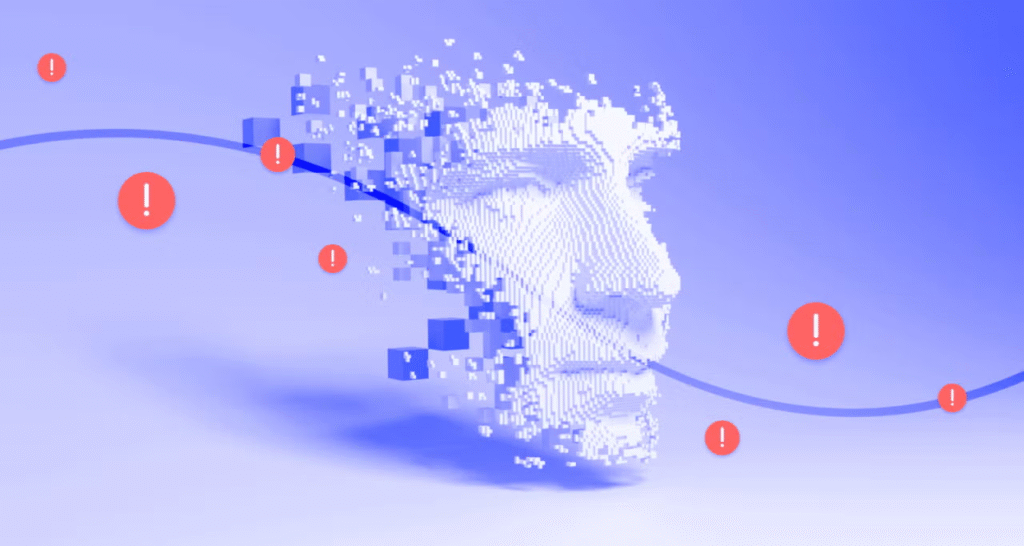
Picture By Entrust
Social engineering, the art of manipulating human behaviour rather than exploiting technical systems, has long been among the most effective instruments in a cybercriminal’s repertoire. The emergence of highly sophisticated deepfake technology has, however, elevated this threat to an entirely different order of magnitude. Threat actors can now generate remarkably convincing synthetic audio and video content that impersonates senior executives, trusted clients, or familiar colleagues with deeply unsettling accuracy.
Cybercriminals already weaponise deepfake voice calls to trick employees into authorizing fraudulent transfers or surrendering credentials. The attack surface for deepfake-based deception has greatly increased as video conferencing and remote work arrangements have become commonplace business practices.
Defending against this category of threat demands considerably more than technological safeguards. Organisations must cultivate a culture of verification where security teams train employees to question unusual requests, apply multi-step confirmations, and spot manufactured urgency before bypassing protocol.
6. Data Privacy Regulations Are Intensifying, and the Penalties Are Consequential
Regulatory frameworks governing the collection, storage, and protection of personal data are growing materially more stringent across jurisdictions worldwide. The General Data Protection Regulation highlights the massive financial risks non-compliant organisations face: regulators fined a major international platform over $370 million in 2023 for a single violation.
Beyond direct financial penalties, regulatory non-compliance carries reputational consequences of comparable severity. Customers are choosing to interact with businesses that treat privacy as a substantive commitment rather than a procedural formality because they have a more sophisticated understanding of data rights.
7. The Cybersecurity Skills Gap Is Leaving Organisations Critically Exposed
The need for skilled cybersecurity workers is still far greater than the talent pool. The situation is worsening, with two out of every three organisations reporting moderate-to-critical proficiency gaps in their security functions. The global cyber skills deficit has expanded by 8% since 2024, leaving a growing number of businesses without the expertise required to implement, manage, and respond to an increasingly complex and hostile threat environment.
Cybersecurity-as-a-Service models, which provide flexible, scalable utilisation of enterprise-grade threat detection, vulnerability management, and compliance monitoring, have become increasingly popular due to this reality.
Whether investing in internal talent or partnering with managed security service providers, businesses can no longer defer cybersecurity capabilities to a later date.
8. Quantum Computing Represents the Threat Horizon That Demands Attention Now

Picture From FreePik
Quantum computing does not yet constitute an immediate, mainstream threat. It is, however, advancing with a velocity that many organisations have been slow to appreciate, and the preparation window is narrower than it may appear. Quantum computers could soon compromise many of the encryption standards that underpin modern digital security, exposing today’s protected data to future decryption.
Sophisticated state actors already execute “harvest now, decrypt later” operations, intercepting and archiving encrypted data today so they can decrypt it as soon as quantum computing matures.
Organisations handling highly sensitive data should not wait for the threat to become immediate. They should begin assessing and adopting quantum-resistant cryptographic standards now.
The Imperative Is Clear
Organisations can no longer delegate cybersecurity exclusively to the IT department. It is a strategic organisational imperative that necessitates sustained investment, executive-level attention, and an enterprise-wide culture of ongoing, informed vigilance.
The organisations that will navigate this landscape with confidence are not necessarily those with the largest budgets. They are those who remain rigorously informed, respond decisively, and internalise the foundational truth that, in cybersecurity, proactive preparation will always be measurably less costly than reactive response.
Your Digital Security Starts With Ivara Innovation
Understanding the threat landscape is the first step. Having the right team beside you is what makes the difference. At Ivara Innovation, we combine world-class digital expertise with a deep investment in your success. From strategic consultation to comprehensive digital solutions, we are here to help your business move forward with confidence, clarity, and the protection it deserves.
Connect with us today at ivarainnovation.com.
