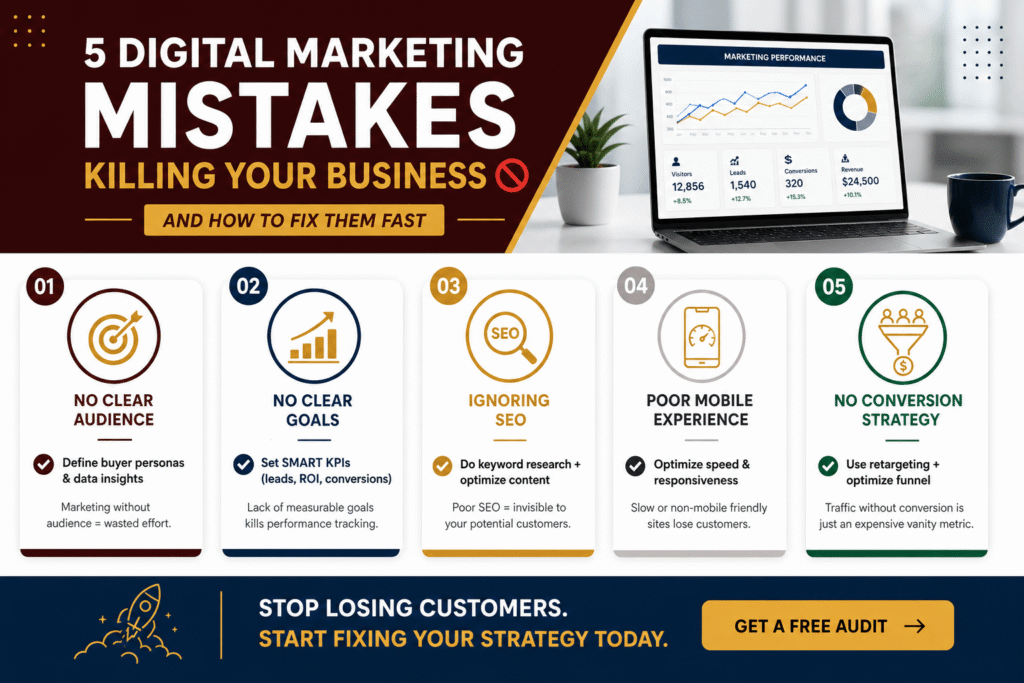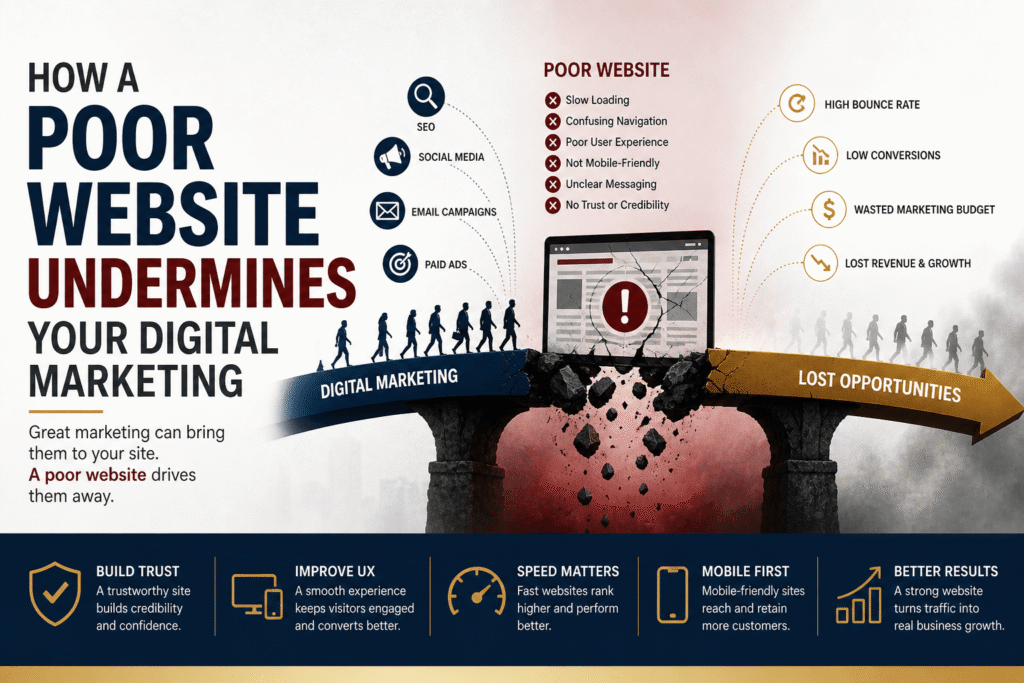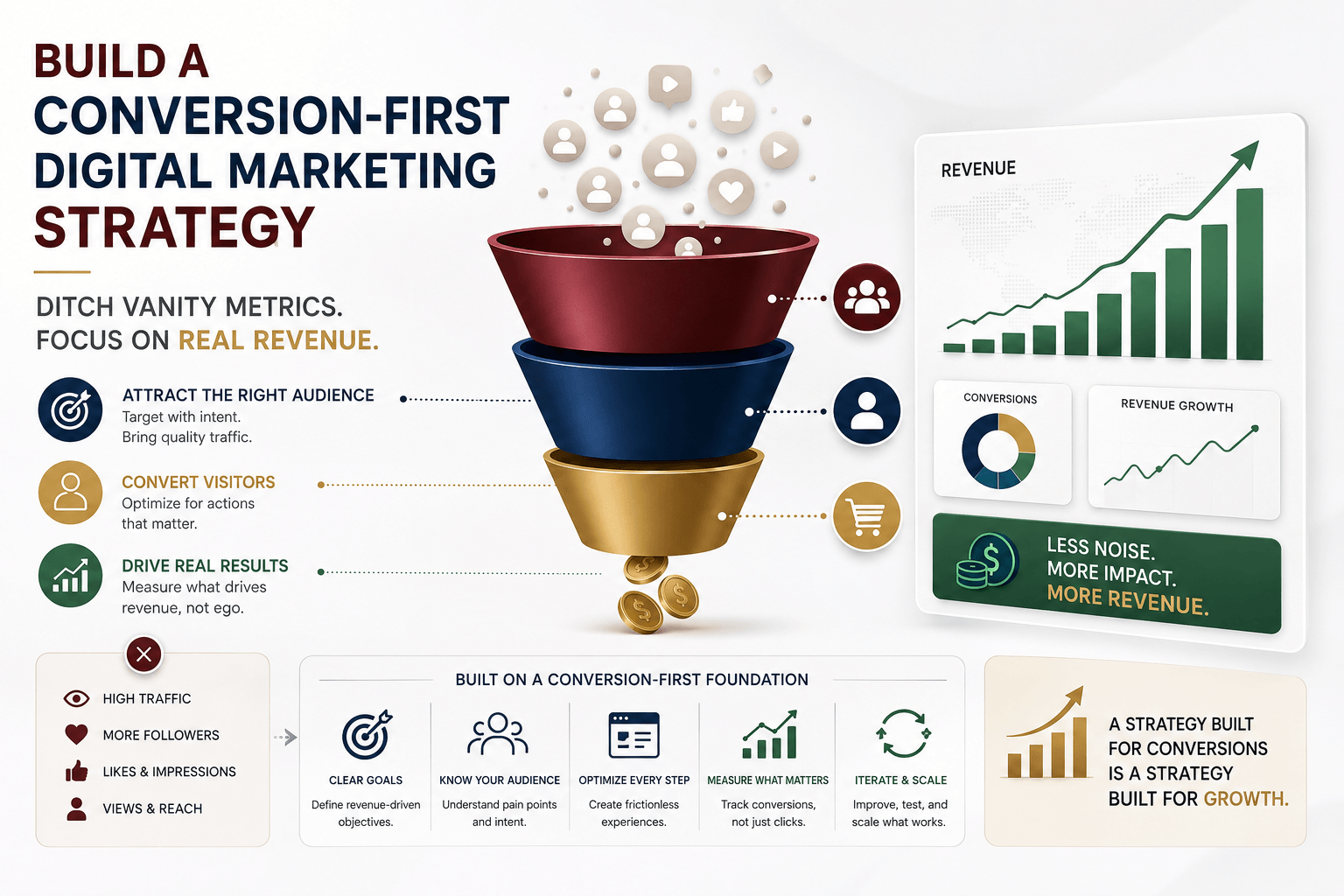
Vanity metrics like likes, shares, and followers feel good but rarely drive sales. A conversion-first digital marketing strategy prioritizes actions that matter: leads, purchases, sign-ups. For small businesses, this means measurable growth without wasting time on fluff. Here’s how to build a conversion-first digital marketing strategy step by step, from research to tracking.
1. Nail Audience Research: Know Who Buys, Not Just Who Looks
Start with who your ideal customer really is-not assumptions, but data-backed personas. This is the foundation of any conversion-first digital marketing strategy.
Why it matters: Targeting the wrong crowd inflates vanity stats while conversions tank.
How to do it:
- Survey existing customers (use Google Forms: “What problem do we solve for you?”)
- Analyze competitors’ reviews and top-performing content
- Build 2-3 personas: e.g., “Priya, 30, Kathmandu professional seeking quick healthy meals”
- Tools: Free options like Facebook Audience Insights or Google Trends
Result: Messaging that resonates, boosting conversion rates by 20-50%
2. Craft Compelling Messaging: Speak to Pain Points and Desires
Your words must convert browsers into buyers. Focus on benefits, not features. A true conversion-first digital marketing strategy lives or dies by your messaging.
Why it matters: Generic copy gets scrolled; personalized hooks trigger action.
How to do it:
- Use the “So what?” test: “Our coffee is organic” → “Fuel your busy day with pure, local organic coffee-no crash”
- Incorporate urgency: “Claim your free sample-today only”
- A/B test headlines and CTAs (e.g., “Buy Now” vs. “Get 20% Off Instantly”)
- Pro tip: Mirror customer language from research for authenticity
This shifts focus from impressions to clicks that lead to sales.
3. Select the Right Channels: Match Platforms to Your Audience
Don’t spray and pray-pick 2-3 channels where your audience lives and conversions happen. Every conversion-first digital marketing strategy requires channel discipline.
Why it matters: Spreading thin dilutes efforts; concentrated channels amplify results.
How to do it:
- Map personas to platforms: Instagram for visuals, LinkedIn for B2B, Google Ads for high-intent searches
- Prioritize owned channels (email, website) for highest conversions (up to 40x ROI)
- Budget: 60% paid (ads), 40% organic (content, SEO)
- Example: A Nepali e-commerce store uses WhatsApp Business for direct sales chats
Test small, scale what converts.
4. Map the Conversion Funnel: Guide Users from Awareness to Purchase
Treat marketing like a sales funnel: Top (awareness), Middle (consideration), Bottom (decision). Without this structure, your conversion-first digital marketing strategy will leak revenue.
Why it matters: Leaks happen without structure-users drop off before buying.
How to do it:
- Awareness: Free value (blog posts, reels) to attract
- Consideration: Retarget with testimonials, webinars
- Decision: Strong offers (discounts, free trials) + easy checkout
- Automate: Email sequences (Day 1: Welcome; Day 3: Case study; Day 7: 10% off)
| Stage | Goal | Tactics |
|---|---|---|
| Awareness | 1,000 visitors | Social ads, SEO |
| Consideration | 100 leads | Lead magnets, retargeting |
| Decision | 20 sales | Abandoned cart emails |
Nurture every stage for 3x higher conversions.
5. Implement Robust Tracking: Measure What Moves the Needle
Track actions, not applause. Set up systems to follow the money. This is where a conversion-first digital marketing strategy separates from vanity-driven marketing.
Why it matters: Without data, you’re optimizing for likes, not revenue.
How to do it:
- Key metrics: Conversion rate, cost per acquisition (CPA), customer lifetime value (CLV)
- Tools: Google Analytics 4, Facebook Pixel, Hotjar
- Tag everything with UTM parameters (e.g.,
?utm_source=instagram) - Weekly review: “Did this campaign lower CPA below $10?”
- Goal: Aim for 2-5% conversion rate benchmark for starters
Refine quarterly based on insights.
Conclusion
A conversion-first digital marketing strategy turns marketing into a revenue engine. Implement these steps, starting with audience research this week, and watch vanity metrics fade while sales climb. Your business deserves results, not just recognition.
Ready to audit your current strategy? Start building your conversion-first digital marketing strategy today.