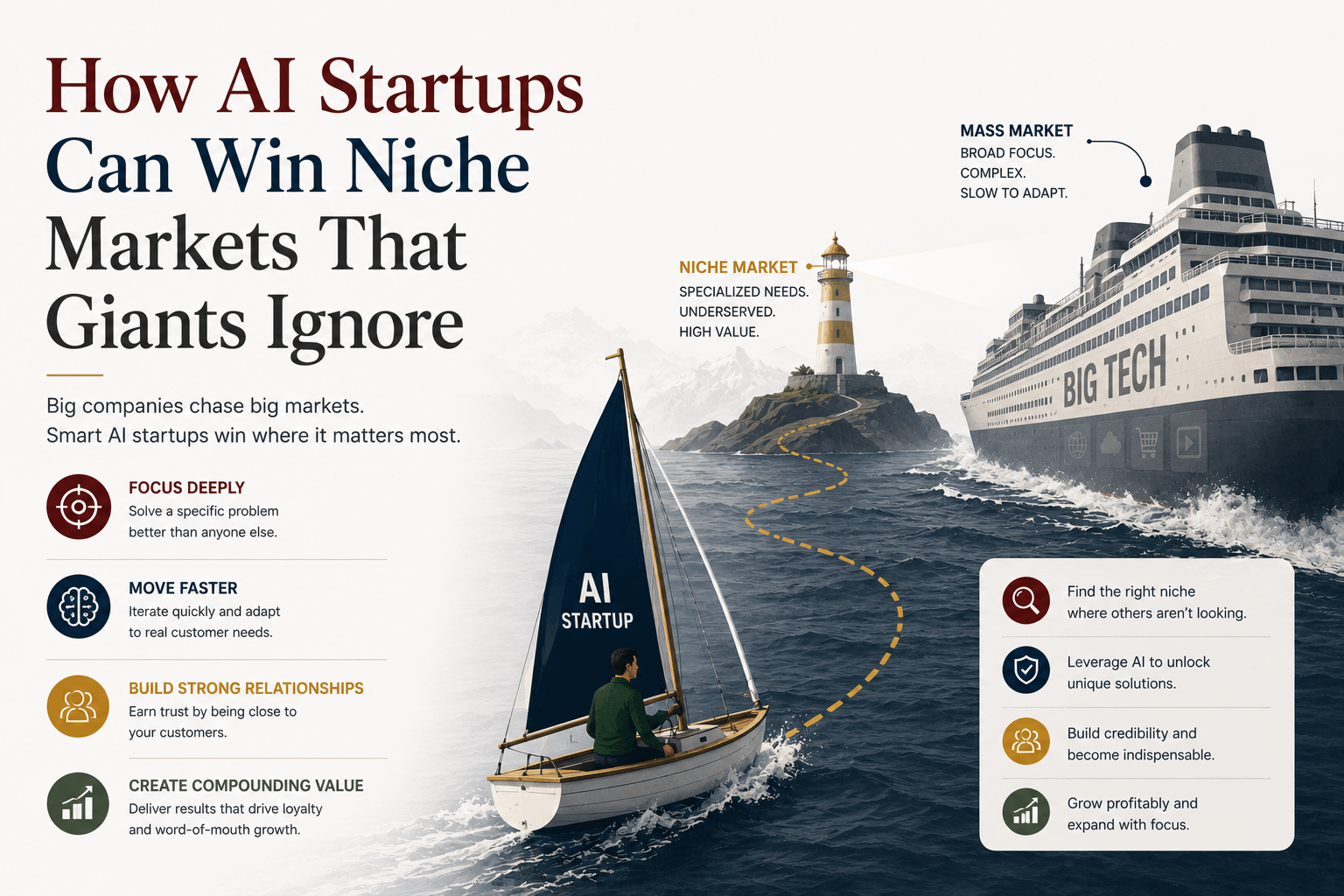
In the AI arena, giants like OpenAI, Google, and Microsoft chase massive markets (think general-purpose chatbots or enterprise-scale analytics). But these behemoths often overlook narrow, specialized niches due to slim margins, complex domain expertise, or lack of scale. That’s where nimble AI startups shine. By zeroing in on underserved segments, you can build defensible moats, loyal customers, and explosive growth. Let’s explore how.
Spot the Hidden Opportunities
Big players prioritize broad applicability to maximize ROI, leaving gaps in verticals like agriculture, artisanal crafts, or regional compliance needs. Your edge? Deep market research.
- Hunt for pain points giants ignore: Analyze industries with high fragmentation, like craft brewing or boutique veterinary care. Tools like Google Trends, Reddit forums, or industry reports reveal unmet needs (e.g., AI for predicting hop spoilage in microbreweries).
- Leverage domain expertise: Partner with niche experts. A startup like CropX succeeded in precision agriculture by blending AI with soil sensors, ignoring broad farming apps.
- Validate fast: Run MVPs with 50-100 target users via surveys or beta tests. Aim for niches where customers pay premiums for tailored solutions.
Startups win by moving quicker than giants, who need committee approvals for every pivot.
Build Laser-Focused Solutions
Once you’ve picked your niche, craft AI that’s hyper-specialized, not a jack-of-all-trades.
- Customize models ruthlessly: Fine-tune open-source LLMs like Llama on niche datasets. For example, LegalRobot carved a space in small-law contract review, where giants focus on Big Law.
- Integrate seamlessly: Embed AI into users’ workflows. In eldercare, startups like ElliQ offer companion robots for seniors, sidestepping general health apps.
- Prioritize data flywheels: Collect proprietary data from early users to improve your model iteratively. This creates barriers giants can’t easily replicate without starting from scratch.
Pro Tip: Keep your tech stack lean. Use no-code tools like Bubble or Vercel for rapid prototyping to outpace incumbents.
Hustle Smarter Than the Giants
Scale doesn’t mean outspending. It means outsmarting.
| Strategy | Startup Play | Giant Blind Spot |
| Go-to-Market | Viral loops via niche communities (e.g., LinkedIn groups, Discord servers) | Mass advertising to broad audiences |
| Pricing | Freemium with niche upsells (e.g., $49/mo per clinic) | One-size-fits-all enterprise tiers |
| Partnerships | Co-sell with local influencers or associations | Slow bureaucracy for deals |
| Retention | White-glove onboarding and 24/7 niche support | Self-serve portals for millions |
Look at Notion AI’s early wins. They targeted productivity niches like indie creators before expanding.
Defend Your Turf Long-Term
Niches aren’t forever. Giants may notice your success. Protect yourself:
- Monetize early: Bootstrap to profitability. Aim for $1M ARR in year one via 200 customers at $400/mo.
- Expand horizontally: Once dominant, adjacent niches open up (e.g., from beekeeping AI to apiary supply chains).
- Stay agile: Monitor giant moves with tools like Crunchbase alerts, and pivot to even narrower sub-niches.
Real-World Wins
- Plaud AI: Voice notes for journalists and podcasters, ignored by broad transcription giants.
- Runway ML: AI video for indie filmmakers, before Hollywood-scale tools emerged.
- Your Opportunity: In Nepal’s tourism sector, imagine AI for hyper-local trek planning, blending weather data, cultural nuances, and porter matching. Giants won’t bother.
AI startups thrive by owning the “boring” corners first. Giants chase the spotlight. You claim the goldmine. Pick your niche, build obsessively, and watch loyalty compound.
What niche are you eyeing?