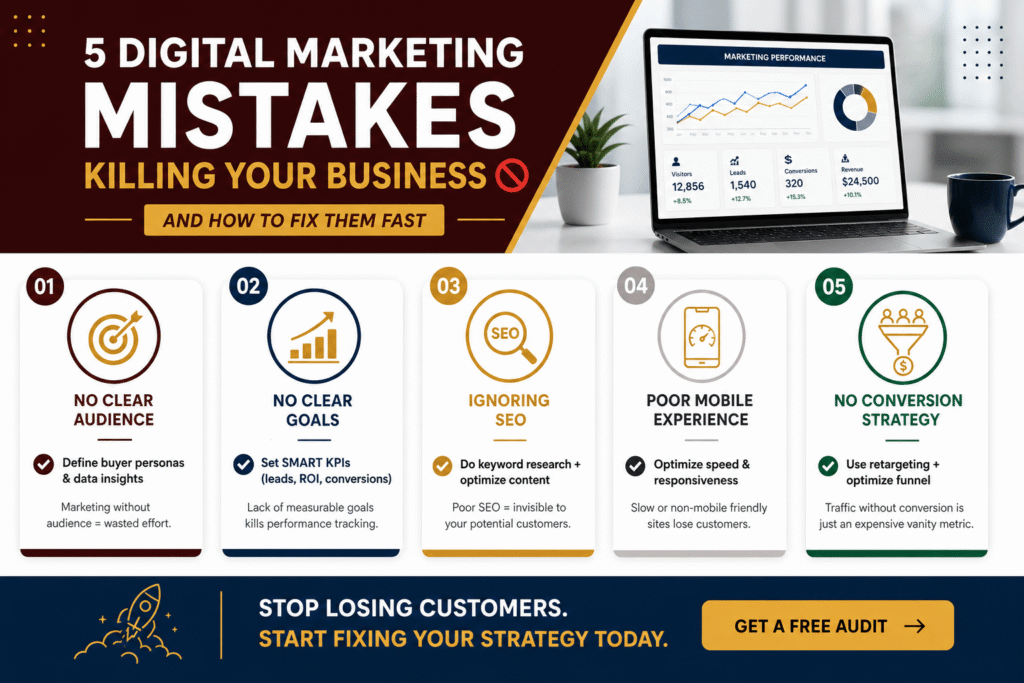
Digital marketing promises big results for small businesses—more customers, higher sales, scalable growth. Yet, many owners pour money into ads, social media, and emails only to see crickets. The truth? It’s rarely the strategy itself; it’s execution pitfalls that trip you up. Let’s unpack the five most common reasons it flops, with straightforward ways to course-correct.
1. Poor Targeting: Shooting Blanks in a Crowded Room
You can’t sell snowboards to beach lovers. Small businesses often blast generic ads to “everyone online,” wasting budgets on uninterested clicks.
Why it fails: Platforms like Facebook and Google reward relevance. Broad targeting means low engagement, high costs, and zero conversions.
Quick fix: Narrow your audience. Use customer data (age, location, interests) to create buyer personas. Example: A Kathmandu coffee shop targets “25-40-year-old professionals within 10km who like local cafes” instead of “all Nepal.” Test with small ad budgets and refine based on who engages.
2. Inconsistent Branding: Your Business Looks Like Everyone Else
Posting a professional logo one day and a blurry selfie the next confuses followers. Inconsistent visuals, tone, or messaging makes your brand forgettable.
Why it fails: Customers trust familiarity. Scattered branding erodes credibility, especially against polished competitors.
Quick fix: Create a simple brand kit—colors, fonts, voice (e.g., friendly and local for a Nepali shop). Stick to it across Instagram, website, and emails. Tools like Canva make this free and easy. Audit your profiles weekly to stay on track.
3. Weak Offers: Asking for Sales Without Sweetening the Deal
“No one buys” often means your offer sucks. Bland pitches like “Buy our product” ignore what customers crave: value, urgency, or exclusivity.
Why it fails: In a noisy digital world, people scroll past meh deals. Weak offers don’t solve pain points or spark FOMO.
Quick fix: Amp it up. Bundle products (e.g., “Buy coffee, get a free pastry”), add scarcity (“Limited to first 50 customers”), or guarantee results (“Money-back if not thrilled”). A/B test headlines like “Save 20% Today” vs. “First-Time Buyer? 20% Off + Free Delivery.”
4. Lack of Tracking: Flying Blind into the Storm
You launch campaigns but never check if they’re working. No metrics? You’re guessing, not growing.
Why it fails: Without data, you repeat mistakes—like dumping cash into underperforming Instagram ads while email converts like crazy.
Quick fix: Set up free tools now. Google Analytics for website traffic, Facebook Pixel for ad tracking, and UTM links for every campaign. Track key metrics: click-through rate, cost per lead, ROI. Review weekly: Pause losers, scale winners. Start small—one goal per campaign, like “10 sign-ups.”
5. Unrealistic Expectations: Wanting Overnight Millions
“Marketing will explode my business in a week!” Spoiler: It won’t. Small businesses expect viral fame without the grind.
Why it fails: Digital marketing builds momentum over time—3-6 months for traction. Impatience leads to abandoning solid tactics too soon.
Quick fix: Set SMART goals (Specific, Measurable, Achievable, Relevant, Time-bound), like “Gain 200 email subscribers in 30 days.” Budget realistically (5-10% of revenue). Celebrate small wins, like a 2x ROI, and iterate. Patience pays: Consistent effort compounds.
Digital marketing isn’t magic—it’s a skill honed by avoiding these traps. Audit your current setup against this list, tweak one thing today, and watch traction build. Small businesses thrive when they play smart, not hard.
What’s your biggest digital marketing headache right now?